
About This Course
This flexible degree allows you to explore the physical processes that shape the Earth, the social, cultural and economic processes that influence people and places, and the human environment relationships. You will begin with a broad geographical foundation that introduces you to social, physical and environmental geographies. You will go on to develop understanding in, and the ability to analyse key global challenges, such as climate change, natural hazards, water resources and pollution. Our modules cover everything from glacial and ocean environments to soils and environmental policy. We will introduce you to a range of research methods and IT, GIS, and statistical skills. You will develop professional and transferrable skills that employers value. During your final year you will conduct your own research under staff guidance, allowing you to showcase your abilities developed throughout your studies. Field work is an integral part of this degree, and there will be lots of opportunity to get outside and learn valuable skills in/around North Wales, alongside residential trips in the UK and Europe. You can study abroad or participate in our placement year (either work or study). This degree is accredited by the Royal Geographical Society (with IBG). Accredited degrees contain a solid academic foundation in geographical knowledge and skills and prepare you to address the needs of the world beyond higher education.
BA or BSc? Students on both degrees can choose from the same range of optional modules. If you chose BSc (F800) you might mainly select physical geography modules, but you can still choose human geography modules that give you the flexibility to maintain your interest in both sides of the discipline.
MGeog? You can also convert onto the MGeog at the end of Year 2, providing your year average mark is above 55%.
Why choose Bangor University for this course?
- TV presenter Steve Backshall is now part of our teaching team.
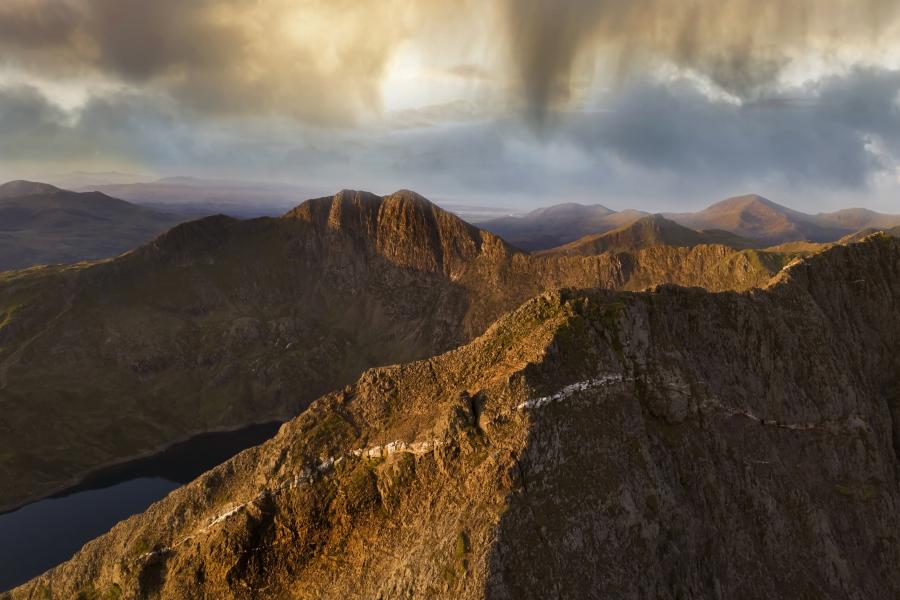
- Half and full-day field trips taking advantage of our location, which is set against the backdrop of the dramatic north Wales coastline, Menai Strait, and the mountains of Snowdonia National Park.
- Strong links with organisations: Forestry Commission, Natural England, the Snowdonia National Park Authority, Natural Resources Wales, Centre for Ecology and Hydrology, Welsh Water, Environment Agency. Some contribute to teaching and provide placements opportunities.
- We have a Geographical Information Systems Suite.
Course Content
Your learning will take place in a range of different settings from lectures, laboratory work and field courses to seminars and small-group tutorials. Seminars provide the opportunity for you to discuss and analyse new material, ideas and concepts with other students and your tutor. Small-group tutorials may be structured around study skills development or problem solving, and give you the opportunity to ask questions, raise issues or explore material taught in lectures. You will have access to our virtual learning environment, which hosts learning resources, course documents and lecture capture recordings (where available) for your modules. Your studies also involve a considerable amount of independent study.
You will study 120 credits in each year. This degree is constructed of a number of modules some compulsory, and others optional. You will be assessed in a combination of ways: coursework; essays; presentations; reports; projects/dissertations; examinations; and practical tasks. Some assessments may involve group work. Assessment methods for modules are generally split 60/40 for coursework and exams.
EXPLORE MORE IN GEOGRAPHY
Geography is the subject of our time, dynamic and constantly evolving as the world around us changes. Our courses offer the opportunity to study a broad range of human, physical and environmental topics, but also to become well-trained in a range of research methods (field and laboratory).
Facilities
General University Facilities
Library and Archive Services
Our four libraries provide a range of attractive study environments including collaborative work areas, meeting rooms and silent study spaces.
We have an extensive collection of books and journals and many of the journals are available online in full-text format.
We house one of the largest university-based archives not only in Wales, but also the UK. Allied to the Archives is the Special Collections of rare printed books.
Learning Resources
There is a range of learning resources available, supported by experienced staff, to help you in your studies.
The University’s IT Services provides computing, media and reprographics facilities and services including:
- Over 1,150 computers for students, with some PC rooms open 24 hours a day
- Blackboard, a commercial Virtual Learning Environment, that makes learning materials available on-line.
Careers
Our graduates are highly employable and are in demand due to their sought-after skills of project management, teamwork and communication. as well as the subject knowledge you develop during your studies. You will graduate with a widely respected degree that opens a wide variety of career prospects. Our graduates have been recruited by a variety of organisations, including: Natural Resources Wales, Network Rail, DHL, Airbus Defence and Space, National Grid, Ordnance Survey, Economic and Social Research Council, local government, independent environmental consultancies. A Geography degree also provide the foundation for further postgraduate study and research. You could also enhance your employability by registering for the Bangor Employability Award while you are here.
Foundation Year
A 'with Foundation Year' option is available for this course. Apply for Environmental Science (with Foundation Year).
What is a Foundation Year course?
If you don’t have the required qualifications for the degree-level course or are looking to re-enter education after time away from study, then a Foundation Year Programme might be the right choice for you.
The Foundation Year is an excellent introduction to studying this subject at university and will provide you with the knowledge, skills and confidence required to go on to study this course at degree-level.
When you have successfully completed the Foundation Year, you can progress on to the first year of this degree-level course.


My name is Kavisha Prince Anthony, and I always had a dream of studying abroad. Thankfully, that dream came to life since I applied to the Study Advisor. I was able to receive my visa within four days. I also had some visa refusals in the past; I had about six UK visa refusals in the past, but thankfully, it was not an issue since the Study Advisor was able to make things work this time. I highly recommend Study Advisor for your dreams of going abroad, whether it be the UK or any other European country there is.