
About This Course
Biomedical Science underpins the scientific investigation of human health and disease. This course will give you an understanding of the biology of disease, including modern concepts and applications of biomedical science in the research, diagnosis and treatment of clinical disorders. There is a growing need for graduates experienced in the advanced diagnostic and molecular techniques that are revolutionising disease diagnosis and treatment in the NHS, Armed Forces, Industry, Academia and Research.
This course has been specifically designed in collaboration with local NHS clinical laboratories and has been accredited by the Institute of Biomedical Science. Scientific and clinical staff from hospitals in North Wales will be involved in many aspects of teaching and many members of staff are prior practitioners.
Biomedical Science is concerned with the integration of a wide range of subjects that underpin the scientific investigation of human health and disease. This course is designed to give you an understanding of the biology of disease, including modern concepts and applications of biomedical science in the research, diagnosis and treatment of clinical disorders. You’ll be encouraged and supported to assimilate knowledge from core biological sciences to develop skills in the more specialised biomedical disciplines of clinical biochemistry, cellular pathology, haematology and medical microbiology.
Why choose Bangor University for this course?
- Top 5 for Teaching Quality & Student Experience (Times Good University Guide 2021).
- Top 10 for Career Prospects (Guardian Good University Guide 2021).
- Top 10 for Research Quality (Complete University Guide 2021).
- Excellent facilities including cutting edge, specially designed teaching laboratories.
- NHS Pathology lab work experience, designed to meet HCPC requirements for registration as a Biomedical Scientist and graduate with an Applied Biomedical Science degree, available on a competitive basis.
Course Content
This course has been specifically designed in collaboration with local NHS clinical laboratories and has been accredited by the Institute of Biomedical Science. Scientific and clinical staff from hospitals in North Wales will be involved in many aspects of teaching and many members of staff are prior practitioners. Biomedical Science is concerned with the integration of a wide range of subjects that underpin the scientific investigation of human health and disease. This course is designed to give you an understanding of the biology of disease, including modern concepts and applications of biomedical science in the research, diagnosis and treatment of clinical disorders. You’ll be encouraged and supported to assimilate knowledge from core biological sciences to develop skills in the more specialised biomedical disciplines of clinical biochemistry, cellular pathology, haematology and medical microbiology.
What will you study on this course?
Year 1
The first year is an introduction to important aspects of Biomedical and Medical Sciences and includes lectures, laboratory practical sessions and tutorial sessions in key foundation subjects. Your first year modules have an emphasis on developing the key factual and practical skills which you will require to progress with the remainder of your studies. Examples of material you’ll be covering include human physiology, molecular genetics, cell biology, microbiology, chemistry as well as fundamental academic skills. In your laboratory sessions we’ll teach you how to work safely within a laboratory environment as well as the wider regulatory frameworks in which laboratory environments operate.
Year 1 is common to all three of the degrees listed below which gives you the opportunity to change to one of the other degrees (subject to eligibility criteria), giving you the flexibility to change degree routes before the start of year two if your interests change.
- Biomedical Science (B102)
- Medical Sciences (B100)
- Medical Biology (B103)
Years 2 & 3
Your second and third-year modules have an emphasis on medical microbiology, clinical biochemistry, cellular pathology, immunology, haematology and transfusion science, drug development and molecular and genetic studies. During these two years you’ll spend time working on subject specific case studies to hone the various techniques and knowledge and applying them to real world situations. An over-arching theme will be the development of transferable skills such as critical analysis, data interpretation and the ability to communicate biomedical science to a variety of audiences. In the third year, this culminates in self-directed research and medically related scientific literature research which you’ll submit as your final dissertation.
A further key aspect of the second- and third-year modules is the emphasis placed on genetics & molecular biology. This is essential knowledge for modern day life science and as a result we integrate its teaching into all relevant modules as well as having several bespoke modules which will explore everything from the cell-cycle to complex inherited conditions. We’ll teach you how the world of molecular biology can not only be used to diagnose patients but also to help treat various diseases.
NHS Pathology Laboratory Work Experience Year
There may be an opportunity for those interested in forging careers in NHS Pathology laboratories to apply for voluntary work experience during the course and follow a training programme designed to meet the requirements to apply for registration as a Biomedical Scientist with the Health and Care Professions Council. If this is something you’d be interested in there is a competitive selection process and you would apply to transfer onto Applied Biomedical Science at the end of Year 2 (Level 5). Admission to Applied Biomedical Science is based on academic merit, a competitive panel interview and the submission of an appropriate personal statement. Students who successfully complete this one-year voluntary placement would then graduate with the degree BSc Applied Biomedical Science, in recognition of the additional professional skills gained.
Facilities
General University Facilities
Library and Archive Services
Our four libraries provide a range of attractive study environments including collaborative work areas, meeting rooms and silent study spaces.
We have an extensive collection of books and journals and many of the journals are available online in full-text format.
We house one of the largest university-based archives not only in Wales, but also the UK. Allied to the Archives is the Special Collections of rare printed books.
Learning Resources
There is a range of learning resources available, supported by experienced staff, to help you in your studies.
The University’s IT Services provides computing, media and reprographics facilities and services including:
- Over 1,150 computers for students, with some PC rooms open 24 hours a day
- Blackboard, a commercial Virtual Learning Environment, that makes learning materials available on-line.
Careers
This programme will give you the theoretical, practical and transferable skills which will be valuable across a range of employers. Examples of paths which our alumni have followed include: pharmaceutical industry, medical research, food science, public health, armed forces, forensic science and the degree is also accepted by many universities for postgraduate courses in Medicine, Dentistry and Veterinary Science.
Another career path that a significant number of our alumni follow is working in NHS pathology laboratories, helping our health service with the diagnosis of patients. Our IBMS-accreditation helps prepare you for the fast paced and interesting work of a modern day pathology laboratory with disciplines ranging from organising blood transfusions to detecting viral infections in patients.
Graduates will also be ideally placed for MSc and PhD programmes in the wider life science disciplines and for research positions within the NHS as well as being well placed to apply for the NHS Scientist Training Programme.
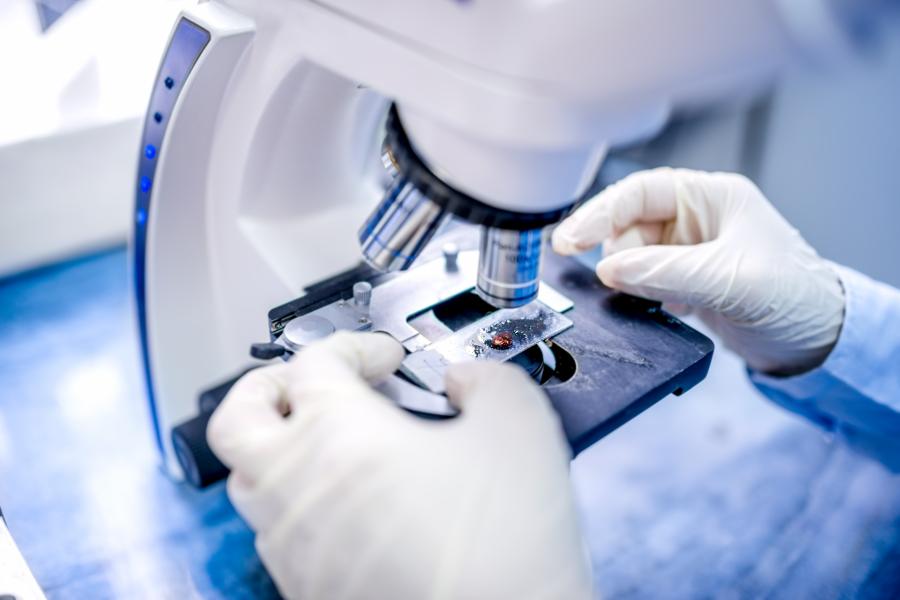
EXPLORE MORE IN MEDICAL SCIENCES
Medical science covers many subjects which build on a foundation of basic biology and includes areas of specialisation such as Anatomy, Physiology, Pathology, Biochemistry, Microbiology, Molecular Biology, and Genetics. Our degrees in Medical Sciences are grounded in modern medical practice and as one of our graduates you’ll have the skills to enter into a range of clinical, medical and healthcare career pathways.
International Experience Year
This course is available with an International Experience Year option where you will study for 1 additional year.
Studying abroad is a great opportunity to study with specialists, see a different way of life and broaden your horizons. With international experience of this kind, you’ll really improve your career prospects. If you plan to study in a country where English is not spoken natively, there may be additional language support available for you.
There are a wide variety of destinations to choose from and when you graduate you will have ‘with International Experience’ added to your degree title.
You can find out more about the International Experience Year programme on the Student Exchanges section of our website.
You will have the opportunity to fully consider this option when you have started your course at Bangor and can make an application for a transfer onto this pathway at the appropriate time. If you have any questions in the meantime, please get in touch.


My name is Kavisha Prince Anthony, and I always had a dream of studying abroad. Thankfully, that dream came to life since I applied to the Study Advisor. I was able to receive my visa within four days. I also had some visa refusals in the past; I had about six UK visa refusals in the past, but thankfully, it was not an issue since the Study Advisor was able to make things work this time. I highly recommend Study Advisor for your dreams of going abroad, whether it be the UK or any other European country there is.