
Course overview
Study level: Postgraduate
The MSc Renewable Energy Management course has been designed to equip you with the knowledge, skills and experience needed to access the growing renewable energy jobs markets and aims to help facilitate the global energy system transition.
The ways that we currently source and consume energy need to be transformed if we are to avoid the worst consequences of climate and ecosystem breakdown.
- The challenge of transition is sizable. Some technological solutions do already exist, with the electricity sector transition well underway, and with wind, solar PV and electrification of heating and transport taking bold steps. Hydrogen, CCS and further energy efficiency improvements are also gaining prominence in the quest for a clean energy future. There should be plentiful career options post-graduation for those who master the wave of energy transition as it unfurls before us.
- The Renewable Energy Management MSc course aims to support persons looking to begin careers that will contribute to the affordable, reliable and sustainable delivery of energy for all. You will have the opportunity to develop skills to appraise renewable energy projects and explore how to strengthen governance structures to accelerate the decarbonisation process – within communities, organisations and nationally.
- You will have the option to apply for a ‘work placement’ opportunity2, designed to further develop your skills and knowledge with the aim of maximising your employability prospects. See modules for more information.

Global ready
An international outlook, with global opportunities
Teaching excellence
Taught by lecturers who are experts in their field
Employability
Career ready graduates, with the skills to succeedWhy you should study this course
- The global energy sector is changing, and the pace of change will increase as technology prices and policy support for clean energy solutions advance. This Renewable Energy Management MSc course has been designed to meet this challenge and features the very latest energy sector developments, ensuring students are well placed to take advantage of this fast-moving sector upon graduation.
- Given its importance, we devote a whole module to examining how we can model energy systems (supply and demand) so that strategic decisions can be made on technology options and future renewable energy roadmaps (e.g., how electric vehicles will fit into our future energy systems, which storage option/s to adopt, what approaches to space heating/cooling to explore, etc.).
- In an ever more interconnected world, renewable energy professionals must be able to analyse their stakeholders' expectations and tailor their engagement approaches to meet the demands of different audiences, be they clients, organisations, communities, policy makers or other consultants. Our module on ‘Stakeholder engagement and communication’ aims to help students develop this critical skill, which is increasingly necessary for a successful career in the energy sector upon graduation.
- The course is designed to have a strong international dimension, with emphasis placed on understanding the different approaches to energy provision based on climatic, social and economic conditions. Our current staff have international industry and academic experience, which in the past has attracted a truly global student cohort. We encourage discussion and investigation of the various technical, environmental and geopolitical challenges facing our global energy systems.
- Modules are specifically designed to equip you with the skills necessary to immediately access the burgeoning renewable energy jobs markets, whether it be feasibility studies for renewable energy systems, energy officer/auditor roles within commercial/government organisations, or analyst roles with companies involved in energy markets. Assignments are predominantly based on applied, real-world tasks. Supported by staff with industry experience, you are given the flexibility to determine your final dissertation topic thus providing the opportunity for a stepping-stone towards your preferred career path (please note staff may be subject to change).
Accreditation and Professional Recognition
This course is accredited1 and recognised by the following bodies:

Chartered Management Institute
As part of this course, you will undertake a professional development module which is currently accredited by the Chartered Management Institute (CMI) for the 2022-23 intake. Upon successful completion of the module, you will gain the CMI Level 7 Certificate in Strategic Management and Leadership Practice at no additional cost. Further details can be found under the modules and on the Professional Development module webpage.
Memberships
Energy Institute (EI)
The School of Energy, Construction and Environment is a Learning Affiliate member of the Energy Institute (EI), which means all students within the school are eligible for free student membership during their studies and provides the opportunity for students to be plugged directly into the energy sector. Student membership with the EI could help you to boost your CV and may provide energy sector knowledge resources and the chance for potential networking/professional development opportunities. Find out more about the EI and its free student membership.
What you'll study
In addition to the technical content in the taught modules, you will study a series of modules designed to help you develop the personal attributes and academic and research skills to achieve your potential. These sessions provide an opportunity to address individual learning needs and areas for improvement.
Learning is further supported by studying with active researchers and senior and experienced energy sector practitioners and opportunities to join field trips and site visits2 that aim to support converting theory into practice.
- Year one
Modules
- Conventional Global Energy Systems - 15 credits
- Decarbonisation and Energy System Transitions - 15 credits
- Appraising Wind, Hydro and Marine Energy Projects - 15 credits
- Energy Economics and Policy - 15 credits
- Appraising Solar, Bioenergy and Geothermal Projects - 15 credits
- Energy Management, Efficiency and Auditing - 15 credits
- Stakeholder Engagement and Communication - 15 credits
- Social and Environmental Impact Assessment - 15 credits
- Preparing to Research - 0 credits
- Research Project - 50 credits
- Supporting Transition to Postgraduate Study - 0 credits
- Leading Strategic Change through Creativity and Innovation - 10 credits
With work placement pathway
The ‘With work placement’ opportunity2 enables you to apply in semester 1 for an optional work placement of up to 12 months, extending the duration of your master’s to 24 months. The placement provides an opportunity for you to develop expertise and experience in your chosen field with the aim of enhancing your employability upon graduation. The work placement would take place in semesters 3, 4 and 5.
Please note that the optional placement modules incur an additional tuition fee of £4,000. Placement opportunities may also be subject to additional costs, visa requirements being met, subject to availability and/or competitive application. Work placements are not guaranteed but you will benefit from the support of our Talent Team in trying to find and secure an opportunity. Find out more about the work placement option.
We regularly review our course content, to make it relevant and current for the benefit of our students. For these reasons, course modules may be updated.
Assessment
This course will be assessed using a variety of methods which will vary depending upon the module.
Assessment methods include:
- Formal examinations
- Phase tests
- Essays
- Group work
- Presentations
- Reports
- Projects
- Coursework
- Individual Assignments
Our mix of assessments offer you a range of opportunities to demonstrate your achievements against the learning outcomes. Assignments are designed to reflect the demands of industry and you may be asked to produce technical reports, energy audits, feasibility studies, public awareness material or policy briefings. Tutorial modules are designed to help strengthen your study skills and support mid-career students returning to education and those who are less familiar with assessment by coursework.
The Coventry University Group assessment strategy ensures that our courses are fairly assessed and allows us to monitor student progression towards achieving the intended learning outcomes.
Postgraduate
Students who have achieved a 4-year Bachelor’s degree with an overall score of 55%
*Students completing the 3 Year Diploma in Physiotherapy from IIHS (International Institute of Health Sciences) can be accepted onto MSc Advancing Physiotherapy Practice subject to faculty approval and successful interview.
Students are required to have a UKVI IELTS score of at least 6.5 overall with a minimum of 5.5 in each skill or TOEFL iBT with a score of 88 and a minimum component score of 19.
Facilities
Our aim is to offer you sector-leading facilities4:
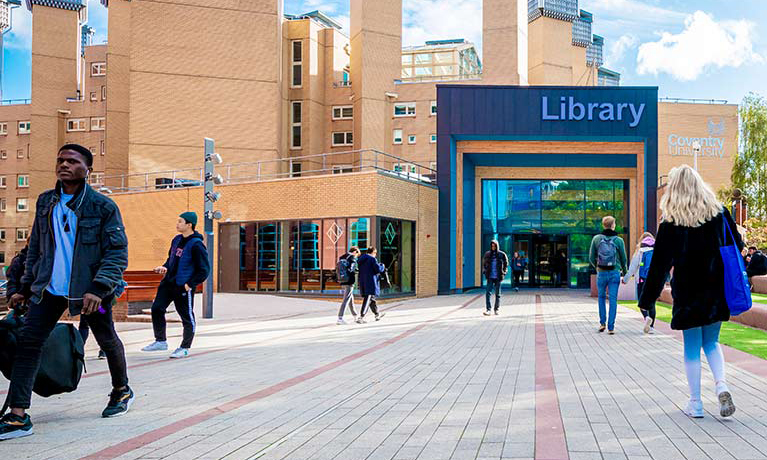
The Library
The Lanchester Library is open 24/7, 364 days a year and has 1,400 study spaces, including group and silent areas. It also currently offers more than 550 computers and an additional 120 free-to-loan laptops.
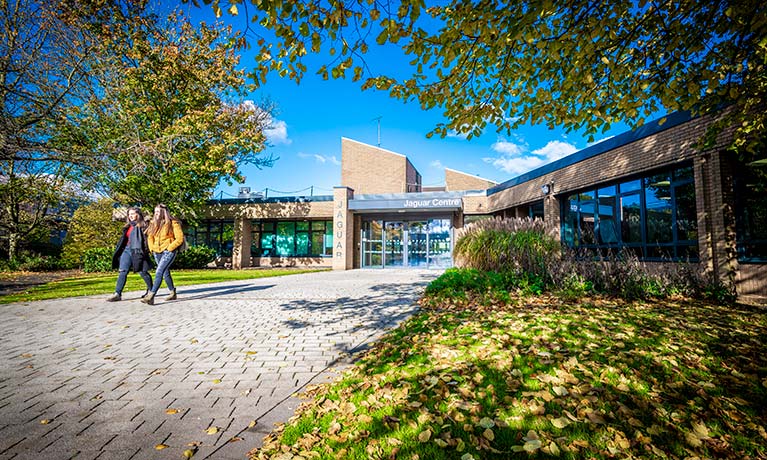
Jaguar Centre
Our refurbished Jaguar Centre has been specifically designed to provide facilities and services to support our postgraduate students including: social spaces, computer suites and separate areas for small group study.
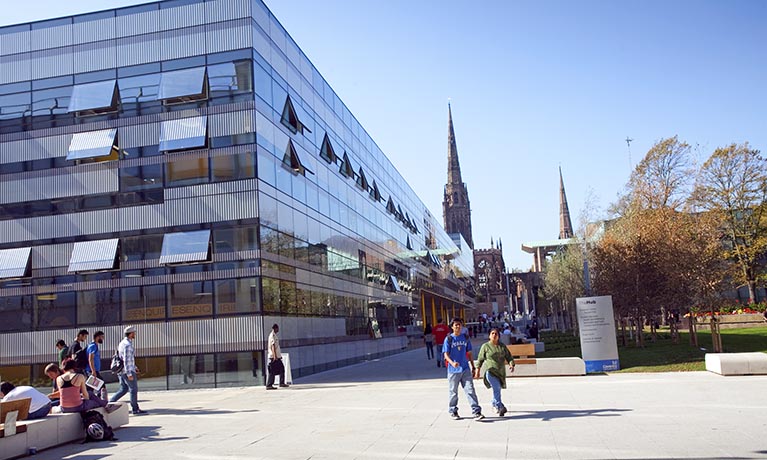
TheHub
TheHub is the centre of student campus life. It's also home to: The Health and Wellbeing Centre, The Spirituality and Faith Centre, The Tank Studio, The Careers and Add+vantage Office and the Enterprise Hub.
Facilities
Our aim is to offer you sector-leading facilities4:
The Library
The Lanchester Library is open 24/7, 364 days a year and has 1,400 study spaces, including group and silent areas. It also currently offers more than 550 computers and an additional 120 free-to-loan laptops.
Jaguar Centre
Our refurbished Jaguar Centre has been specifically designed to provide facilities and services to support our postgraduate students including: social spaces, computer suites and separate areas for small group study.
TheHub
TheHub is the centre of student campus life. It's also home to: The Health and Wellbeing Centre, The Spirituality and Faith Centre, The Tank Studio, The Careers and Add+vantage Office and the Enterprise Hub.Careers and opportunities
We are seeing extensive divestment in the various fossil fuel sector, which will require simultaneous investment in clean energy systems. This change is already taking place and will need to keep doing so at an increasing rate. Successful graduates from this course will be well positioned to take advantage of jobs in positions such as energy officers, consultants, analysts, advisors, R&D, NGOs and government energy agencies, as well as the many oil and gas corporations that are now turning their sights on decarbonisation.
Upon successful completion of the course, you will be able to:
- Demonstrate a high-level understanding of the components that make up the global energy system, including energy sources, generation and integration technologies, supply chains, and end-uses (electricity, transportation, heating/cooling).
- Critically evaluate potential renewable energy and energy management projects, and subsequently support their planning, financing, management and operation within a changing energy market.
- Apply economic concepts, principles and tools to the energy sector, and understand how policy, standards, regulatory and legislative frameworks impact upon various factors within the energy sector.
- Understand the importance of and apply appropriate techniques in multi-stakeholder engagement, communication, and co-operation in aspects of policy, project implementation and management.
- Critically analyse the challenges and strategies (short-term and long-term) in transitioning towards decarbonised energy systems with focus on energy supply, efficiency/conservation, storage and disruptive technologies.
- Evaluate the issues and techniques involved in collecting, analysing and communicating energy data, and demonstrate research design and execution skills within renewable energy-related topics.
- Demonstrate personal skills and competencies expected of an energy sector professional, including operating within individual and team settings, including digital fluency and written, oral, visual, and numerical skills.
Where our graduates work
Previous graduates from our School have gone on to work as energy officers in industry, local authorities, government agencies, universities and consultancies. Others have undertaken further study leading to a PhD.


My name is Kavisha Prince Anthony, and I always had a dream of studying abroad. Thankfully, that dream came to life since I applied to the Study Advisor. I was able to receive my visa within four days. I also had some visa refusals in the past; I had about six UK visa refusals in the past, but thankfully, it was not an issue since the Study Advisor was able to make things work this time. I highly recommend Study Advisor for your dreams of going abroad, whether it be the UK or any other European country there is.