
About This Course
Marine Biology is the study of organisms that occupy 95% of the biosphere of our planet, living in conditions ranging from the polar seas (below -2℃) to hydrothermal vents (greater than 100℃). We are increasingly aware of the value of marine organisms for their role in influencing and indicating changes in our climate, for food, medicine and other products. The majority of the worlds species are found in the oceans; and range from the smallest micro-organism on the planet to the largest invertebrates such as giant squid and mammals like the blue whale. This very popular course allows you to study the fundamental aspects of the biology of marine life as well as more specialised aspects such as aquaculture, fisheries and marine biotechnology.
We are one of the largest university centres teaching marine sciences in the UK and among the biggest in Europe.
Our excellent teaching facilities include an extensive marine and freshwater aquaria with a suite of temperature controlled rooms.
We are on the coast, next to the Irish Sea and the Menai Strait so the perfect place to study ocean science, providing a range of habitat types for field courses and study sites for final-year projects.
Why choose Bangor University for this course?
- We are one of the largest university centres teaching marine sciences in Britain and cover the full range of marine sciences.
- Your learning will take place just a few metres from the sea.
- We have a research ship and tropical and temperate marine and freshwater aquariums.
- Your lecturers from coral reefs to the frozen polar seas.
- Many of our graduates go on to work in conservation, both at home and overseas, with others working in the media.
Course Content
This course typically involves up to 30 hours per week of lectures, practicals laboratory and fieldwork, private study, tutorials and project work. Many modules include day field trips, for example to intertidal mud flats and rocky shores. In year 2 there is a day trip and a field course based on the research ship and in year 3 hypothesis testing exercises are undertaken during the intertidal field project. You also have the option of an overseas field course in Virginia, USA. Your practical work is continually assessed, and examination of each module is by multiple choice questions, laboratory tests and written examinations. The dissertation is assessed by a presentation and a report.
Facilities
- We have a £3.5m ocean-going research ship and three smaller inshore vessels. You may be able to collect data for your year 4 project aboard the Prince Madog and have access to the smaller vessels.
- Our excellent facilities include tropical marine and temperate marine aquaria, analytical laboratories, flow and particle transport simulators and computing capabilities.
- We have unrivalled local access to the ocean and numerous intertidal habitats for undertaking experimental work, including rocky shores, sandy shores and saltmarshes, ideal for undertaking experimental work in the intertidal environment.
General University Facilities
Library and Archive Services
Our four libraries provide a range of attractive study environments including collaborative work areas, meeting rooms and silent study spaces.
We have an extensive collection of books and journals and many of the journals are available online in full-text format.
We house one of the largest university-based archives not only in Wales, but also the UK. Allied to the Archives is the Special Collections of rare printed books.
Learning Resources
There is a range of learning resources available, supported by experienced staff, to help you in your studies.
The University’s IT Services provides computing, media and reprographics facilities and services including:
- Over 1,150 computers for students, with some PC rooms open 24 hours a day
- Blackboard, a commercial Virtual Learning Environment, that makes learning materials available on-line.
Careers
This course offers an ideal preparation for careers in research, conservation, marine resource management, fisheries and aquaculture, government advisory bodies, the scientific media, ecotourism and other leisure industries and pressure groups and many unrelated areas that require analytical skills.
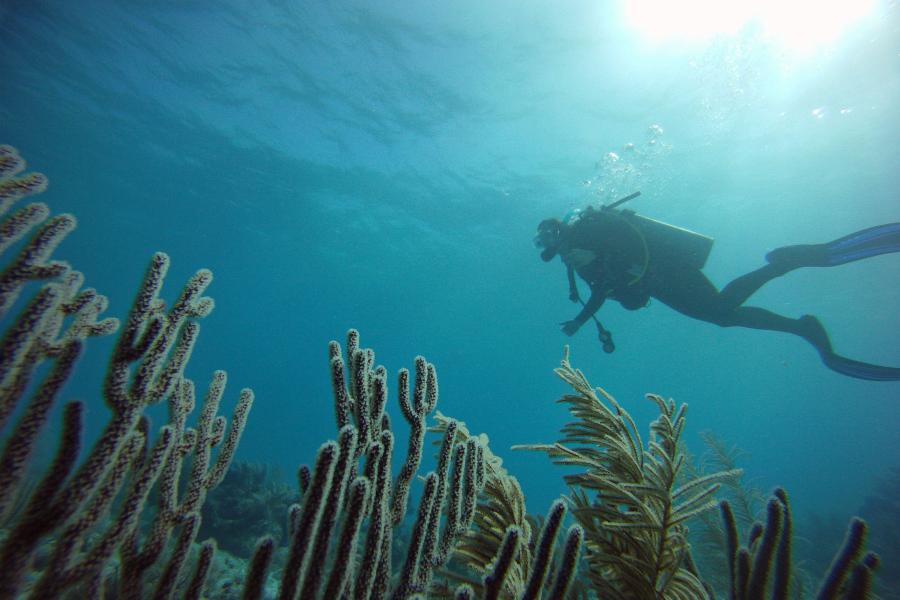
EXPLORE MORE IN OCEAN SCIENCES
Ocean Science at Bangor is unique in encompassing the study of all aspects of the global marine environment, from estuaries and coasts to the deep ocean. We are one of the largest university centres teaching marine sciences in Britain and one of the biggest in Europe.


My name is Kavisha Prince Anthony, and I always had a dream of studying abroad. Thankfully, that dream came to life since I applied to the Study Advisor. I was able to receive my visa within four days. I also had some visa refusals in the past; I had about six UK visa refusals in the past, but thankfully, it was not an issue since the Study Advisor was able to make things work this time. I highly recommend Study Advisor for your dreams of going abroad, whether it be the UK or any other European country there is.