
About This Course
This interdisciplinary degree provides an in-depth study of the biological, chemical and physical processes of the oceans, seas and estuaries. You will embark on a detailed study of life in the sea, from the smallest bacteria to the largest mammals. This knowledge will be underpinned by a specialised understanding how the different marine habitats are affected by key physical (currents, tides, waves and ocean mixing) and biogeochemical (carbon cycle, nutrient recycling by the microbial loop) processes that mediate interactions between the atmosphere, ocean and sea floor.
On this course you will be given an in-depth understanding of the important processes in the oceans, shelf seas and estuaries. We combine the detailed study of life in the sea, from the smallest bacteria to the largest mammals, with a specialised understanding of their physical and chemical environments: the currents, tides and waves, and the biogeochemical interactions within the atmosphere, ocean and sea floor.
Why choose Bangor University for this course?
- Our expertise covers all aspects of the marine sciences. Our research interests range from tropical coral reefs to the polar oceans.
- You will benefit from studying with leading scientists in the fields of marine biology, fisheries, marine chemistry, geosciences and physical oceanography.
- Our unique location in an area of outstanding natural beauty is ideal to study local populations of dolphins, seals and sea birds. We are only a few metres away from the Menai Strait and the Irish Sea
- Facilities: research ship, supercomputers and state-of-the art survey equipment. Oceanographic moorings for data collection.
Course Content
This course typically involves up to 30 hours per week of lectures, practicals laboratory and fieldwork, private study, tutorials and project work. Many modules include day field trips. In year 2 there is a day trip and a field course based on the research ship and in year 3 you will undertake fieldwork in coastal sedimentary environments. Your practical work is continually assessed and examination of each module is by multiple choice questions, laboratory tests and written examinations. The dissertation is assessed by a presentation and a report.
Facilities
General University Facilities
Library and Archive Services
Our four libraries provide a range of attractive study environments including collaborative work areas, meeting rooms and silent study spaces.
We have an extensive collection of books and journals and many of the journals are available online in full-text format.
We house one of the largest university-based archives not only in Wales, but also the UK. Allied to the Archives is the Special Collections of rare printed books.
Learning Resources
There is a range of learning resources available, supported by experienced staff, to help you in your studies.
The University’s IT Services provides computing, media and reprographics facilities and services including:
- Over 1,150 computers for students, with some PC rooms open 24 hours a day
- Blackboard, a commercial Virtual Learning Environment, that makes learning materials available on-line.
Careers
This degree is ideal preparation for careers in research, marine resource management, including off-shore renewable energy and aquaculture, environmental impact assessment, water supply and offshore industries, coastal authorities, government advisory bodies, the scientific media, ecotourism and other leisure industries and pressure groups.
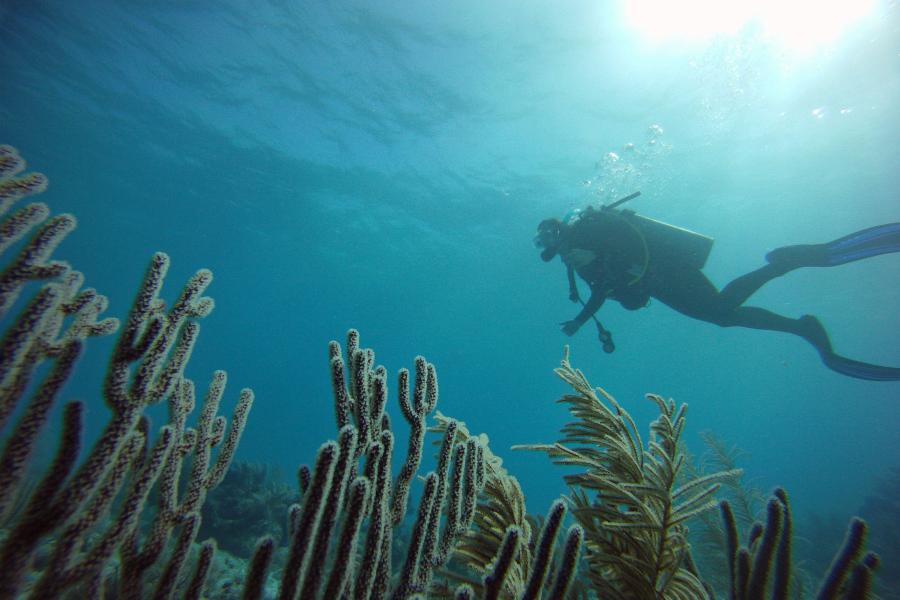
EXPLORE MORE IN OCEAN SCIENCES
Ocean Science at Bangor is unique in encompassing the study of all aspects of the global marine environment, from estuaries and coasts to the deep ocean. We are one of the largest university centres teaching marine sciences in Britain and one of the biggest in Europe.
International Experience Year
This course is available with an International Experience Year option where you will study for 1 additional year.
Studying abroad is a great opportunity to study with specialists, see a different way of life and broaden your horizons. With international experience of this kind, you’ll really improve your career prospects. If you plan to study in a country where English is not spoken natively, there may be additional language support available for you.
There are a wide variety of destinations to choose from and when you graduate you will have ‘with International Experience’ added to your degree title.
You can find out more about the International Experience Year programme on the Student Exchanges section of our website.
You will have the opportunity to fully consider this option when you have started your course at Bangor and can make an application for a transfer onto this pathway at the appropriate time. If you have any questions in the meantime, please get in touch.


My name is Kavisha Prince Anthony, and I always had a dream of studying abroad. Thankfully, that dream came to life since I applied to the Study Advisor. I was able to receive my visa within four days. I also had some visa refusals in the past; I had about six UK visa refusals in the past, but thankfully, it was not an issue since the Study Advisor was able to make things work this time. I highly recommend Study Advisor for your dreams of going abroad, whether it be the UK or any other European country there is.