
About This Course
This degree an extended undergraduate programme which allows you to graduate either with BSc (Hons) at the end of the third year or with a Master at the end of the fourth year. The fourth year offers a unique opportunity to conduct an extended research project either in the laboratory or in the field.
This degree will give you a thorough grounding in general zoology, based on an exploration of the diversity of animal form and function, and an examination of their behaviour, evolution, ecology, development and morphology. You will also gain a specialised knowledge of the conservation, physiology and behaviour of marine invertebrates, through an exciting series of modules.
We will provide you with zoological training and equip you with skills necessary for a career in the field of zoology and marine science. We offer a fantastic mix of laboratory and field zoology experience on this degree, especially in relation to marine organisms and their habitats as Bangor is on the shores of the Menai Strait. Fieldwork is a very important aspect of this course and all our students enjoy them. On this course you will also gain a wealth of other transferable skills such as data analysis, group work, presentational skills and IT skills.
We have our own Zoology Museum with a large collection of vertebrate and invertebrate specimens and an extensive marine aquarium. Our location on the northern coast of the Snowdonia National Park and close proximity to miles of sandy beaches, makes it an ideal place to study Zoology with Marine Zoology.
Cutting-edge science is integral to our research programmes, and feeds through into the teaching environment. into the teaching environment. Our expertise in marine zoology encompasses endocrinology, development, growth, energetics and adaptation of marine organisms, as well as their phylogeography and genetics.
Why choose Bangor University for this course?
- TV presenter Steve Backshall is now part of our teaching team.
- Many of our staff have received awards to acknowledge their contributions to teaching and pastoral support
- Our excellent teaching facilities include an extensive marine and freshwater aquaria with a suite of temperature-controlled rooms and a Natural History Museum which boasts an exceptionally comprehensive collection of vertebrate material.
- Our coastal location, near the Irish Sea and the Menai Strait, makes it an ideal place to study marine zoology – providing a range of habitat types for field courses and study sites for final-year projects.
Course Content
On this course you are required to take 120 credits each year made up of lectures, practicals, and interactive exercises, as well as field trips and tutorials in years 1 and 2. If at the end of Year 2 you have achieved a sufficient standard, then you will be invited to progress onto the Masters year (MZool) following completion of Year 3.
The final year will include a research project, which is supervised by a member of staff on a relevant subject that interests you. Modules become more specialised as the degree progresses and the number of compulsory modules varies between years. Assessment is by a mixture of formal examination and continuous assessment. Welsh medium modules are also available.
Facilities
General University Facilities
Library and Archive Services
Our four libraries provide a range of attractive study environments including collaborative work areas, meeting rooms and silent study spaces.
We have an extensive collection of books and journals and many of the journals are available online in full-text format.
We house one of the largest university-based archives not only in Wales, but also the UK. Allied to the Archives is the Special Collections of rare printed books.
Learning Resources
There is a range of learning resources available, supported by experienced staff, to help you in your studies.
The University’s IT Services provides computing, media and reprographics facilities and services including:
- Over 1,150 computers for students, with some PC rooms open 24 hours a day
- Blackboard, a commercial Virtual Learning Environment, that makes learning materials available on-line.
Careers
Our graduates have undertaken a range of careers in fisheries biology, government organisations, local and national media, and further education.
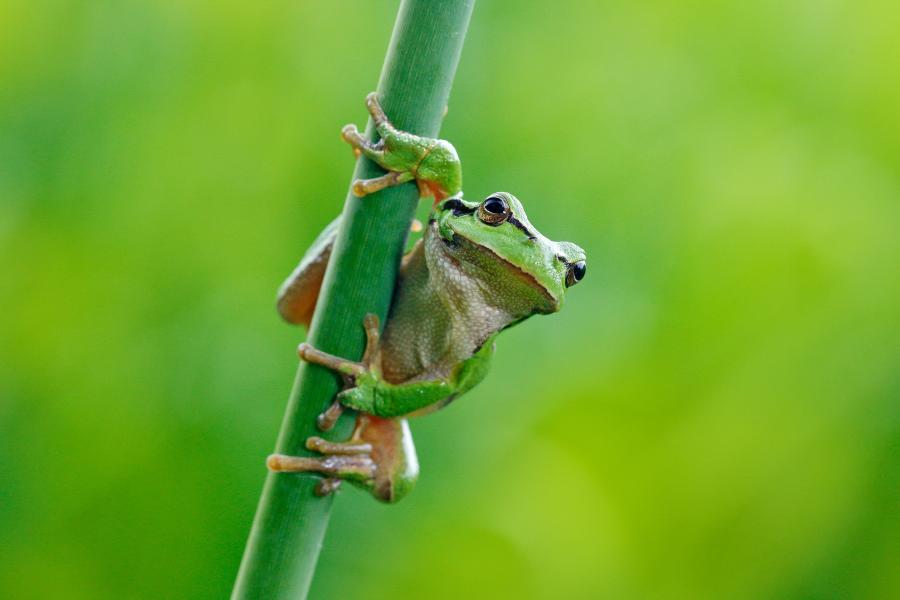
EXPLORE MORE IN ZOOLOGY
Zoology encompasses animal behaviour, animal physiology, evolution, the interactions between animals and the environment and wildlife conservation. Nestled between the mountains and the sea, Bangor University is the obvious choice for anyone wanting to study Zoology as our location presents the best natural laboratory in the UK.
Foundation Year
A 'with Foundation Year' option is available for this course. Apply for Zoology (with Foundation Year).
What is a Foundation Year course?
If you don’t have the required qualifications for the degree-level course or are looking to re-enter education after time away from study, then a Foundation Year Programme might be the right choice for you.
The Foundation Year is an excellent introduction to studying this subject at university and will provide you with the knowledge, skills and confidence required to go on to study this course at degree-level.
When you have successfully completed the Foundation Year, you can progress on to the first year of this degree-level course.


My name is Kavisha Prince Anthony, and I always had a dream of studying abroad. Thankfully, that dream came to life since I applied to the Study Advisor. I was able to receive my visa within four days. I also had some visa refusals in the past; I had about six UK visa refusals in the past, but thankfully, it was not an issue since the Study Advisor was able to make things work this time. I highly recommend Study Advisor for your dreams of going abroad, whether it be the UK or any other European country there is.