
Course Content
What will you study on this course?
This course trains you in integrative counselling, and this means that your training will combine elements from different approaches and therapies around therapeutic principles:
- A relationship between the therapist and client which incorporates the core conditions will provide a framework for therapeutic work leading to change;
- Thoughts, feelings, and behaviour reflect past patterns of relating and can be reformed by exploring experiences within the boundaries of this therapeutic framework;
- Cognitive schemas and behavioural patterns established in this past and reinforced in the present can be modified for the future through challenge and experimentation both within and beyond this safe therapeutic relationship.
Course Structure
This course can be studied full-time over 2 years or part-time over 4 years. On the full-time route during the first year of the course you will gain a comprehensive understanding of psychology, counselling, research, and mental health by covering topics including:
- empirical research in therapy,
- communication and counselling skills,
- therapeutic process and context,
- mental health and wellbeing,
- different approaches and therapies (including Humanistic approach and Person-Centred therapy, Psychodynamic approach and Psychoanalytic therapy, Behavioural approach and Behaviour therapy, Cognitive approach and Cognitive therapy).
During the second year of the course, you will have a unique opportunity to elect two modules from the wide range of options available in the School of Psychology. These options may include courses in Clinical Psychology, Neuropsychology, and Applied Behaviour Analysis (subject to availability). This additional specialised training will give you an extra advantage as a counselling graduate, and will further equip you with the skills needed to excel in your career. You will also complete a research project and compile a portfolio of placement experience.
Full-Time Study
- In the first year, students will attend classes on a Monday and Tuesday. Students will also attend four Wednesdays across the year for assessments (dates will be provided at the start of the semester). Those intending to complete a counselling placement will also attend placement support sessions on a Wednesday morning, but these will be available to access remotely via videocall.
- In the second year, students will attend one morning per week of classes for research and practice. Students will also take two elective modules and the timetable for these will depend on the chosen modules.
Part-Time Study
- In the first year, students will attend classes on a Monday. Students will also attend two Wednesdays across the year for assessments (dates will be provided at the start of the semester).
- In the second year, students will attend classes on a Tuesday. Students will also attend two Wednesdays across the year for assessments (dates will be provided at the start of the semester). Those intending to complete a counselling placement will also need to attend placement support sessions on a Wednesday morning in the second year, but these will be available to access remotely via videocall.
- In the third year, students will take two elective modules and the timetable for these will depend on the chosen modules
- In the fourth year, students will attend one morning per week of classes for research and practice.
- In addition to the above scheduled classes, there are also regular additional open-access support sessions available to all students after class on a Monday and Tuesday and in the morning on a Wednesday. Outside of the scheduled class times, students are free to engage with readings, complete assessments, meet the placement requirements, and fulfil any other obligations (such as part-time work, family commitments, etc.).
Teaching, Learning and Assessment
Our MSc in Counselling will use a range of teaching methods to provide a challenging and engaging learning environment. You will attend lectures introducing the core theories, be supported through computer labs, watch video demonstrations of counselling in action, participate in workshops simulating counselling and supervision, debate important and controversial issues in the field, and receive regular one-to-one support from your personal and professional development tutor. Your assessments on the course will also be varied and diverse, and they will include essays, on-line quizzes, oral exams, presentations, and research reports. You will receive support and guidance for all of these assessments, as we work with you to ensure that every individual has an opportunity to excel.
Research Thesis
Our MSc in Counselling includes an empirical research project in the field of counselling. Our two-year course will provide you with enough time to develop your research skills, design a project, obtain ethical approval, run your study, and write up your research thesis. Research is an essential skill for a career in counselling, as more workplaces demand that their counsellors are able to empirically test their interventions and evidence their impact on clients. Our research training will help you to develop these skills and your research thesis will demonstrate that you are able to work as an empirically-based practitioner.
Counselling Placement
Our MSc in Counselling requires that you complete a core counselling placement of 100 supervised face-to-face counselling hours with adult (18yrs+) clients and 50 hours of work-based practice. After learning the foundations of ethics, boundaries, and communication skills in the first semester, you can begin your placement at the start of the second semester in your first year. You will need to complete all of your hours before graduating from the course in order to gain the MSc in Counselling. You will be provided with support and guidance in identifying a suitable placement, but the responsibility for obtaining a placement and completing all required hours remains with the student. You will also be responsible for ensuring that every month of practice is supported by at least 1.5 hours of supervision by an appropriate counselling supervisor (please be aware that you may need to pay for the services of a supervisor, if sufficient supervision is not provided within your placement). You will also be required to complete at least 15 hours of personal therapy while on the course (please be aware that you may need to pay for the services of a personal therapist). Supervised practice and work-based learning hours are a core requirement of the British Association for Counselling and Psychotherapy.
Careers
One in four adults experience at least one mental health difficulty in any given year and mental health issues account for the largest single cause of disability in the UK (Mental Health Taskforce Strategy, Feb 2016).
The NHS committed to a transformation of mental health care across the UK and pledged to invest more than one billion pounds a year by 2020/21. As a result of this commitment and the increasing need for mental health support, employment opportunities in counselling are likely to expand in the near future. Graduates from this course will be particularly well equipped to succeed in this growing market.
Student Comments
"I wasn't expecting to find a way to work full time as a counsellor within my first year of qualification, but I've been really pleasantly surprised to be working with 20 clients a week. It's sometimes a bit overwhelming, but I'm getting used to it and am generally just really grateful for my career thus far. I went into private practice in October 2020, and I'm happy to say that my books are full!"
"I am working as a psychological wellbeing practitioner for an employee assistance provision. This company offers drop ins for domestic violence and substance misuse. To secure this role, I was asked to explain how I developed my therapeutic orientation and my experiences of counselling. Without the course, I would not have had the opportunity to develop my knowledge and practice in counselling, and would not be in this position."
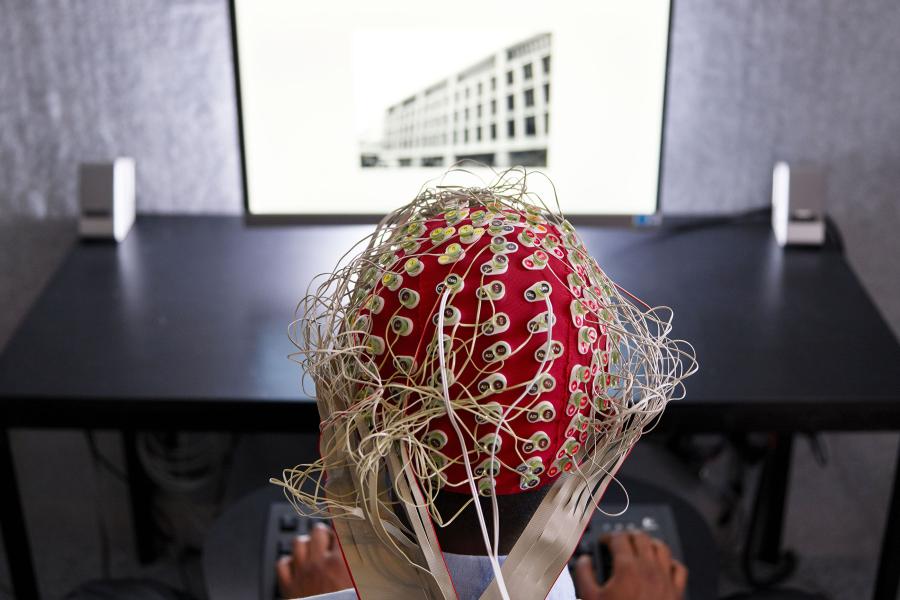
EXPLORE MORE IN PSYCHOLOGY
Psychology as a science and as a profession makes a difference to real people in the real world, by improving quality of life across a wide range of areas. We are proud of our strengths in both the teaching and learning and research domains, ensuring that you’ll be learning the science and application of psychology from world class researchers and lecturers.


My name is Kavisha Prince Anthony, and I always had a dream of studying abroad. Thankfully, that dream came to life since I applied to the Study Advisor. I was able to receive my visa within four days. I also had some visa refusals in the past; I had about six UK visa refusals in the past, but thankfully, it was not an issue since the Study Advisor was able to make things work this time. I highly recommend Study Advisor for your dreams of going abroad, whether it be the UK or any other European country there is.