
About This Course
This MSc is a full-time one-year course, consisting of 9 months taught course and 3 months research project, and examined by continuous assessment. The course provides advanced theoretical and practical training in marine biology. The School of Ocean Sciences at Bangor University has over 50 years’ experience of teaching at postgraduate level, and excellent teaching and research facilities for the study of the marine biology.
The MSc course in Marine Biology is one of a suite of 5 focused MSc courses in marine science run within the School housed in a fully serviced and dedicated postgraduate suite. The MSc course is managed by a course team comprising of Dr Ian McCarthy (Course Director) and Dr Luis Gimenez (Deputy Course Director). The School has 30 academics teaching and researching across the marine science disciplines of Marine Biology, Biogeochemistry, Physical Oceanography and Geological Oceanography with 24 technical and administrative support staff. Teaching on the MSc Marine Biology is provided 'in house' by School academic staff in the main, with additional teaching provided from the University's School of Biological Sciences the National Museum of Wales and by guest lecturers.
Course Content
What will you study on this course?
The course provides training addressing the following major themes:
- Marine Ecology Skills
- Habitat Ecology / Coastal Survey
- Marine Fisheries
- Marine Vertebrates
- Marine Invertebrates
- Research Design & Planning
- Research Project / Dissertation
The programme is achieved through a series of compulsory modules encompassing theory, practical, private study and practical research.
Modules for the current academic year
Module listings are for guide purposes only and are subject to change. Find out what our students are currently studying on the Marine Biology Modules page.
Course content is for guidance purposes only and may be subject to change.
Careers
Graduates of our Biological MScs have taken up the following career paths in recent years:
- Public Sector, e.g. Joint Nature Conservation Committee, Waterways Board, County Councils, Fisheries Protection Committee, National Rivers Authority/Environment Agency, EEC Environmental Commission.
- Private Sector, e.g. Aquatic consultancies specialising in survey and environmental impact assessment, aquaculture, oil industry, mining, instrument development, informatics and computing.
- Voluntary organisations such as World Wide Fund for Nature, Greenpeace, Wildlife Trusts, RSPCA, Royal Geographical Society.
- Higher Education and Research, e.g. Doctorate Research, Research Assistants.
- Overseas students return to comparable posts overseas.
- UK students employed overseas in comparable posts.
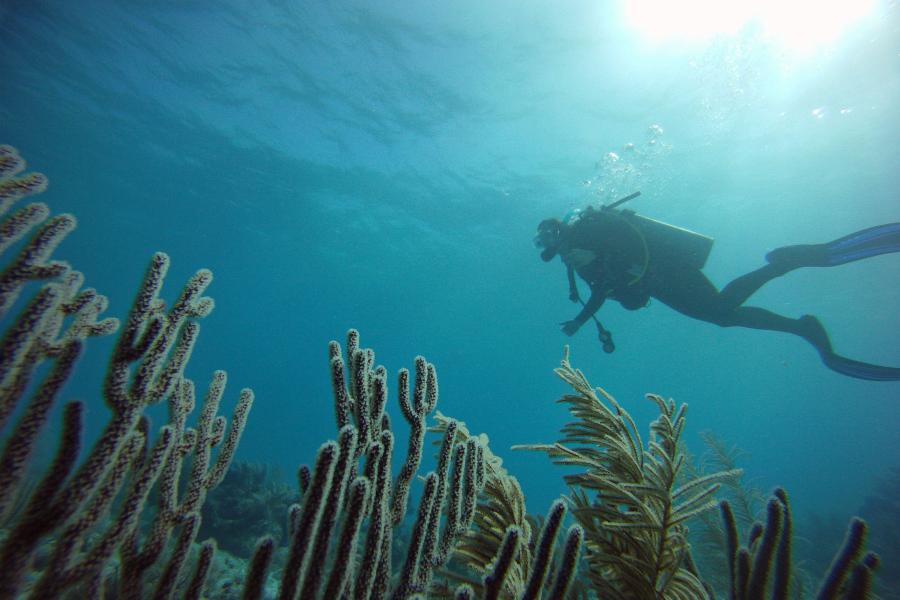
EXPLORE MORE IN OCEAN SCIENCES
Ocean Science at Bangor is unique in encompassing the study of all aspects of the global marine environment, from estuaries and coasts to the deep ocean. Our unique location between the mountains and the sea; our unique facilities, which include a fully equipped sea-going research vessel, makes us one of the most popular Universities in the UK study ocean sciences.


My name is Kavisha Prince Anthony, and I always had a dream of studying abroad. Thankfully, that dream came to life since I applied to the Study Advisor. I was able to receive my visa within four days. I also had some visa refusals in the past; I had about six UK visa refusals in the past, but thankfully, it was not an issue since the Study Advisor was able to make things work this time. I highly recommend Study Advisor for your dreams of going abroad, whether it be the UK or any other European country there is.