
About This Course
The emergence of the Law of the Sea Convention and establishment of Exclusive Economic Zones has given coastal states extensive and comprehensive rights and obligations over marine resources in vast areas of ocean. Wise management of ocean resources is essential if the full economic potential of these new entitlements is to be realised. To ensure the continuing biological productivity of these areas, the level and type of development of activities such as waste dumping, mineral extraction, recreation, industrial and urban growth, fisheries and aquaculture, need to be controlled, and interactions of these often conflicting activities resolved by management.
This MSc is a full-time one-year course, consisting of 9 months taught course and 3 months research project, and examined by continuous assessment. The course provides theoretical and practical training in measuring and quantifying marine resources and the effects of conflicting usage upon them. It provides a sound scientific basis on which to develop policy and make decisions on marine resource exploitation and protection around the world.
Course Content
What will you study on this course?
To broaden the student's awareness of the economic potential of the ocean, to generate an understanding of the major marine biological resources and the physical processes controlling these resources, to provide theoretical and practical training in measuring and quantifying these resources and the effects of conflicting usage upon them, to enhance those skills necessary to manage effectively the sea area of national jurisdiction, and to produce graduates with appropriate experience for developing policy and making decisions on marine resources and other marine uses for their individual countries or regions. To date, most graduates have taken up employment in the field of marine environmental protection in the UK and abroad.
You will receive training in the following major modules:
- Marine Ecology Skills
- Marine Fisheries
- Coastal Habitat Ecology and Survey
- Marine Environmental Impacts and their Assessment
- Marine Conservation and Coastal Zone Management
- Research Project design and Planning
- Research Project and Dissertation
Modules combine different learning approaches, including taught lectures, seminars and working groups, practicals in the laboratory, on the shore or at sea, as well as personal study and practical research.
Skills Trained
The broad areas covered in each module are outlined below.
Marine Ecology Skills
- Experimental and survey design
- Statistical techniques
- Ship work
- Taxonomic Workshop
- Marine benthos survey
- Statistical analysis
- Report writing
Marine Fisheries
- Fisheries biology
- Fisheries resources
- Fisheries survey at sea
- Population dynamics of fin fish
Coastal Habitat Ecology and Survey
- Coastal habitat ecology
- Survey techniques
- Planning biological surveys
- Risk assessment
- Team field survey
Marine Environmental Impacts and their Assessment
- Physical and chemical processes causing impacts
- Development of the coastal zone
- Environmental Impact Assessment
- Preparation of an Environmental Impact Statement
- Consultant / Developer interviews
- EIA public meeting
Marine Conservation and Coastal Zone Management
- Environmental remote sensing and Geographical Information Systems
- Coastal Zone Law
- Socioeconomics
- Biodiversity
- Conservation
- Sustainability
- Integrated Coastal Zone Management
- Coastal Zone Management Conference
Research Project Design and Planning
- Literature review
- Project proposal development
- Scientific peer review
Research Project and Dissertation
- Health and Safety
- Practical research at home or overseas
- 20,000 word dissertation
Careers
- Public Sector, e.g. Joint Nature Conservation Committee, Waterways Board, County Councils, Fisheries Protection Committee, National Rivers Authority/Environment Agency, EEC Environmental Commission.
- Private Sector, e.g. Aquatic consultancies specialising in survey and environmental impact assessment, aquaculture, oil industry, mining, instrument development, informatics and computing.
- Voluntary organisations such as World Wide Fund for Nature, Greenpeace, Wildlife Trusts, RSPCA, Royal Geographical Society.
- Higher Education and Research, e.g. Doctorate Research, Research Assistants, University Lecturing, British Antarctic Survey, Field Centre teaching assistants.
- Overseas students return to comparable posts overseas.
- UK students employed overseas in comparable posts.
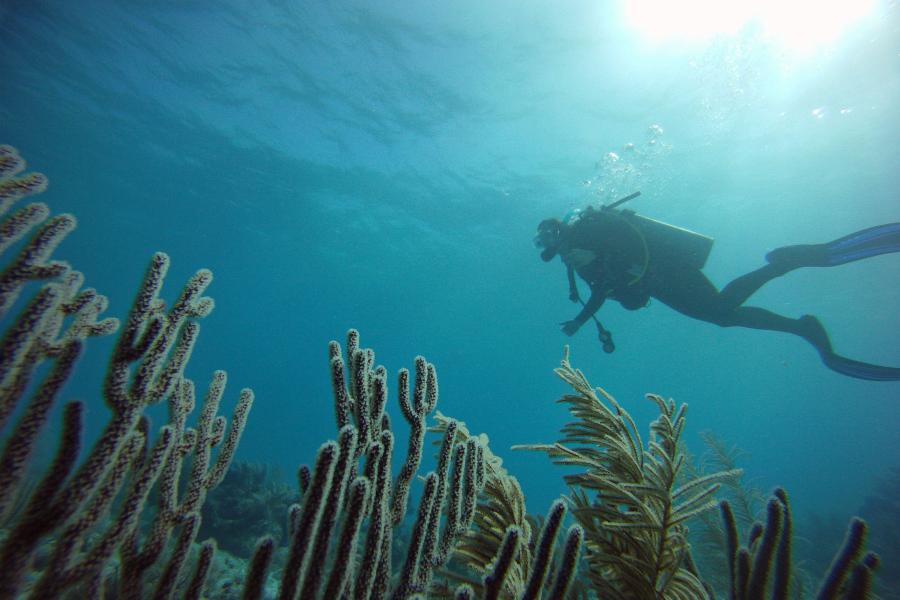
EXPLORE MORE IN OCEAN SCIENCES
Ocean Science at Bangor is unique in encompassing the study of all aspects of the global marine environment, from estuaries and coasts to the deep ocean. Our unique location between the mountains and the sea; our unique facilities, which include a fully equipped sea-going research vessel, makes us one of the most popular Universities in the UK study ocean sciences.


My name is Kavisha Prince Anthony, and I always had a dream of studying abroad. Thankfully, that dream came to life since I applied to the Study Advisor. I was able to receive my visa within four days. I also had some visa refusals in the past; I had about six UK visa refusals in the past, but thankfully, it was not an issue since the Study Advisor was able to make things work this time. I highly recommend Study Advisor for your dreams of going abroad, whether it be the UK or any other European country there is.