
About This Course
To reduce greenhouse gas emissions and aid sustainable development, there is an urgent need to support our electricity generating capacity through the development of low carbon technologies, particularly those generated from renewable sources. The ocean represents a vast and largely untapped energy resource, that could be exploited as a form of low carbon electricity generation, and there is much European and global commercial and R&D activity in this energy sector. The UK is the world leader in the development of wave and tidal stream technologies, and if marine energy deploys globally, the UK is uniquely positioned to capture a substantial market share, with the potential to contribute as much as £4.3 bn to UK GDP up to 2050. The aim of this MSc programme is to equip students with the skills necessary to identify and quantify the potential of specific locations for marine renewable energy generation installations, with an emphasis on the resource (waves and tides), time series analysis, numerical modelling, and the challenges faced when placing arrays of devices in the marine environment.
This 12 month taught postgraduate course introduces students with a first degree in the physical, mathematical or other numerate sciences to the subject of Marine Renewable Energy. As well as providing an overview of marine renewable energy, the course enables students to research in detail those aspects of the subject in which they are particularly interested. The course places particular emphasis on assessing the wave & tidal energy resource, and geophysical nature of sites, providing students with the necessary skills for marine renewable energy resource and site characterisation from a theoretical, technical, and practical perspective.
Course Content
What will you study on this course?
The first two semesters of the course are taught, introducing the student to the physics of the ocean, and the ways in which we can make use of the ocean to generate electricity, whilst minimising environmental impacts. Modules cover both oceanographic theory and its application, as well as practical oceanography. The latter includes an introduction to state-of-the-art instrumentation and numerical modelling, as well as practical experience working on the University's state-of-the-art research vessel, the 35 metre RV Prince Madog. The course also includes a module on geophysical surveying, teaching the techniques used to survey sites suitable for deploying wave and tidal energy arrays. Student achievement in the course is evaluated by a combination of continuous assessment and module examinations.
During the second semester, the students begin to focus on specific aspects of the subject, initially through a dedicated module on marine renewable energy, and subsequently through an extensive literature review followed by a research project. The research project, which forms a major component of the course, is selected in close consultation with the students such that it is of direct relevance to their intended future work. The School of Ocean Sciences has extensive links with the marine renewable energy sector, and many of the projects will be in collaboration with industry. For overseas students, well founded projects based on investigations being undertaken in a home institute are encouraged.
Careers
Individuals graduating from the programme will be in high demand across the marine renewable energy sector, working for device developers as resource analysts, entering oceanographic consultancies working on in situ and modelling studies for the wave & tidal industry, geophysical surveying for the industry, opportunities to work on grid infrastructure (National Grid) and cabling, leasing bodies such as The Crown Estate, and working for government-sponsored environmental bodies such as The Environment Agency and Natural Resource Wales, who ensure that marine renewable energy exploitation will not negatively impact our natural resources. The programme also prepares graduates for many of the technical requirements for a career in offshore wind, and is well suited to providing students with the background to progress to a PhD in marine renewable energy or a related discipline.
EXPLORE MORE IN OCEAN SCIENCES
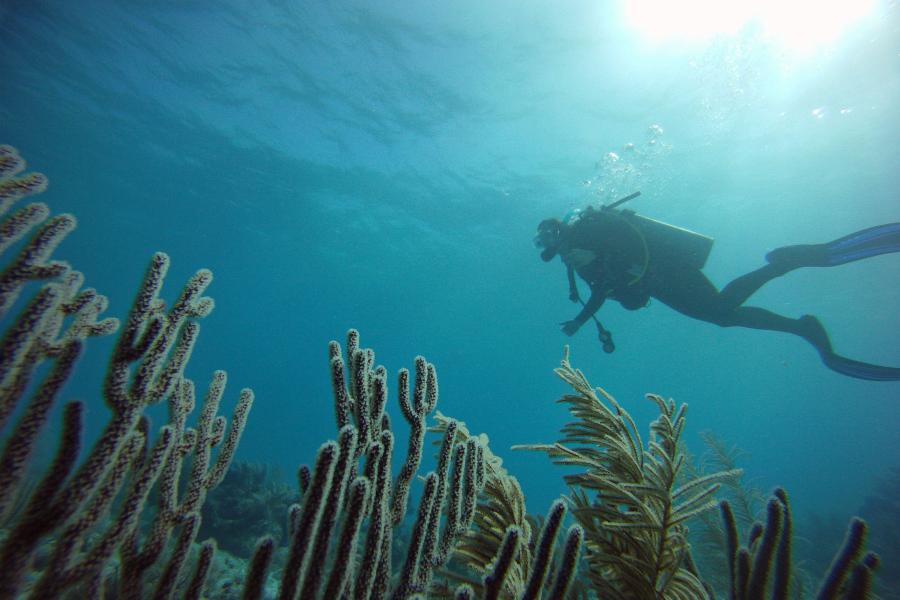
Ocean Science at Bangor is unique in encompassing the study of all aspects of the global marine environment, from estuaries and coasts to the deep ocean. Our unique location between the mountains and the sea; our unique facilities, which include a fully equipped sea-going research vessel, makes us one of the most popular Universities in the UK study ocean sciences.


My name is Kavisha Prince Anthony, and I always had a dream of studying abroad. Thankfully, that dream came to life since I applied to the Study Advisor. I was able to receive my visa within four days. I also had some visa refusals in the past; I had about six UK visa refusals in the past, but thankfully, it was not an issue since the Study Advisor was able to make things work this time. I highly recommend Study Advisor for your dreams of going abroad, whether it be the UK or any other European country there is.