
INTRODUCTION
IN A NUTSHELL
The revolution and rapid growth of biosciences, driven by advancements in genomics, applied immunology, and pharmaceutical therapies, is likely to increase in the post-COVID-19 era. Align your skills for career opportunities in this exciting field with our Biotechnology postgraduate degree.
Led by a research-active academic team, the course draws together developing and highly relevant topics, including molecular biology, proteomics, genomics, novel therapeutics and green (plant) biotechnology. You will explore how biotechnology can address a range of global challenges, including life expectancy, antibiotic resistance and sustainable agriculture.
Available with full and part-time study routes, the course provides you with opportunities to produce a robust scientific argument, and formulate and test hypotheses. You will develop science communication skills, analytical techniques and problem-solving approaches, as you prepare to be a next-generation scientist.
You will:
- Understand how genetic modification and genome editing contribute to contemporary medical and commercial research
- Learn about genome editing technology (CRISPR) and the possibility of adjusting the genome to achieve desired goals and overcome global health challenges
- Strengthen your analytical ability, gain confidence in critical evaluation, and build competence in interpreting bioscience data
THIS IS FOR YOU IF...
You are a science graduate looking to build further scientific skills that can solve contemporary global challenges
You are a science professional fascinated by novel therapies and genomics and keen to enhance your knowledge in this field
You are a science graduate ready to gain postgraduate level skills, carry out research and get hands-on with clinical lab work
ALL ABOUTTHE COURSE
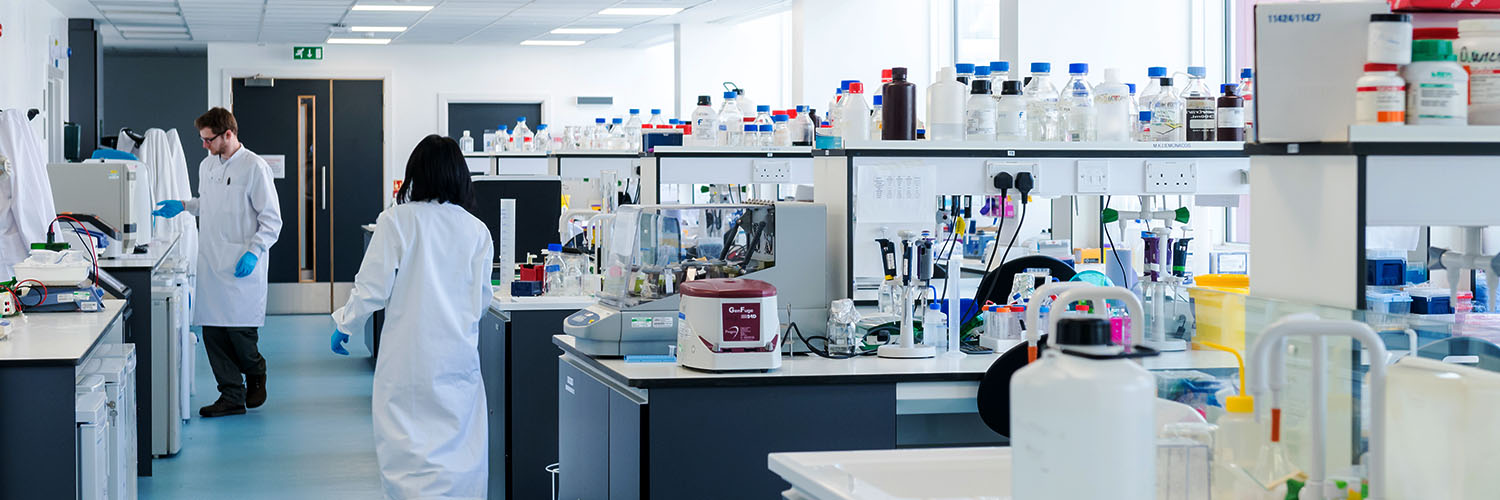
The Biotechnology postgraduate degree course at Salford provides formal qualifications for science professionals looking to develop a laboratory-based skillset. By drawing on our pioneering scientific research, and by applying our collaborative learning approach, the course is designed to provide you with a platform for future career success.
Course delivery
Our MSc Biotechnology course is delivered through a range of highly-focused modules. The 180-credit MSc award comprises eight taught modules, plus a research dissertation.
Flexibility is at the heart of our learning approach. You can choose to study this postgraduate course full-time or part-time on campus, with start dates each January and September:
- As a full-time student, you will complete four 15-credit taught modules in each of the first two trimesters on campus. In the final trimester, you will complete a research dissertation worth 60 credits.
- As a part-time student, you will complete two 15-credit modules in each of the first four trimesters on campus. In two additional trimesters, you will complete a research dissertation worth 60 credits.
Learning experience
The course approaches biotechnology from both medical and commercial perspectives, and focuses on applying this to highly relevant global topics and health challenges. The course is delivered using our advanced Bodmer Laboratories.
Current course topics include molecular biology, proteomics, genomics, medical biotechnology, novel therapeutics and green (plant) biotechnology. The independent research project which encourages you to formulate and test hypotheses is designed to consolidates crucial scientific skills whilst offering you the flexibility to pursue a semi-independent research agenda.
We regularly review module content with our industry partners to ensure acquired knowledge and skills reflect trends and needs within the science community. Learn more about the current course modules in the section below.
Course team
The Biotechnology postgraduate course is delivered by an academic team with exceptional research experience and extensive professional connections.
- Postgraduate Scholarship Skills
- Molecular Biology and Proteomics
- Genomics
- Novel Therapeutics
Trimester two
- Research Design and Delivery
- Green Biotechnology
- Medical Biotechnology
- Professional Practice
- Research project
Please note that it may not be possible to deliver the full list of options every year as this will depend on factors such as how many students choose a particular option. Exact modules may also vary in order to keep content current. When accepting your offer of a place to study on this programme, you should be aware that not all optional modules will be running each year. Your tutor will be able to advise you as to the available options on or before the start of the programme. Whilst the University tries to ensure that you are able to undertake your preferred options, it cannot guarantee this.
WHAT WILL I BE DOING?
TEACHING
The co-creation of knowledge is an overarching learning and teaching strategy at Salford. We encourage you to see yourself as a producer of knowledge and a collaborator in your learning experience.
Learning methods are designed to train you to assess real-life situations and provide measures that would lead to improved professional practice.
- Lectures will introduce core topics, with seminars and tutorials providing opportunities to discuss them further with your tutors and other students in smaller groups
- Laboratory practicals delivered in our Labs will enable you to apply your knowledge in real-world scenarios and build proficiency using equipment
Alongside formal teaching, you will also have regular timetabled meetings with your personal tutor where you can discuss elements of your course, learning progress and potential research topics.
ASSESSMENT
Assessment is designed to develop your skills for future employability and study success. Feedback is regularly provided in the form of personal written communication, online notes, and group-based feedback.
Assessment types can vary with each module, but typical methods include:
- Problem-based learning
- Group work
- Practical work
- Individual report writing
- Scientific communication
- Peer review
- Reflective writing
WHAT ABOUTAFTER UNI?
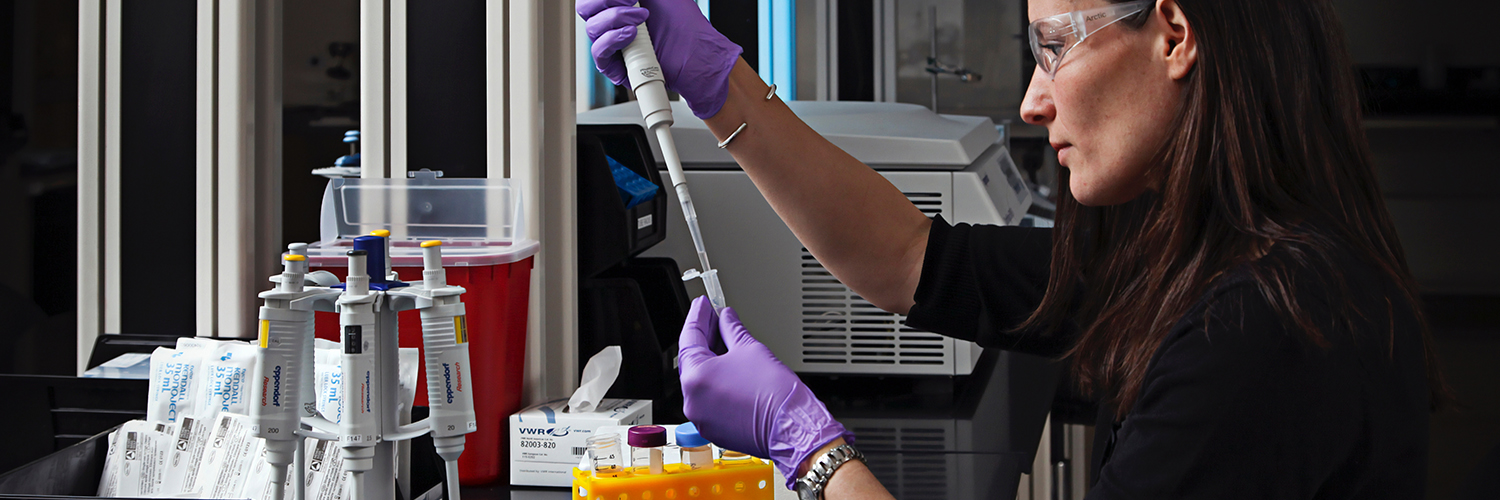
Employment
This course is designed to prepare you for career developments in research, academia and related employment fields. With growing interest in biotechnology fuelled by the COVID-19 pandemic, it is anticipated that new research and work opportunities will arise.
Many of our biotechnology graduates secure roles working as research associates and technicians in clinical and research laboratories, at research universities, and at pharmaceutical and biotechnology organisations, both in the UK and worldwide.
CAREER LINKS
- We are well-positioned to provide you with access to career networks and research opportunities. Locally, the North West is one of the fastest-growing employment region outside of London in science and biomedical science-based vacancies.
- We are driven by industry collaboration, and we ensure that your learning is enriched by our partners and networks. Course modules include industrial site visits and opportunities to engage with research projects carried out at other institutions (recently Universities in Bremen or France and the Cancer Research UK Manchester Institute). We also invite guest lecturers to share their expertise in relevant scientific fields.
- Our bioscience team also hosts a regular postgraduate research seminar series, where we invite experts from outside the University to share their knowledge and latest research findings.
WHAT YOUNEED TO KNOW
APPLICANT PROFILE
This course is designed for applicants motivated by experimental science and with an interest in biology, biotechnology and biochemistry.
We welcome applications from science graduates and professionals who want to develop knowledge in biotechnology, and build relevant skills to work or pursue research in biomedicine, genomics, green biotechnology and pharmaceuticals.
ENGLISH LANGUAGE REQUIREMENTS
All of our courses are taught and assessed in English. If English is not your first language, you must meet our minimum English language entry requirements. An IELTS score of 6.0 (no element below 5.5) is proof of this, however we do accept a range of equivalent qualifications.
Additional costs
You should also consider further costs which may include books, stationery, printing, binding and general subsistence on trips and visits.
International student scholarships
If you are a high-achieving international student, you may be eligible for one of our scholarships.


My name is Kavisha Prince Anthony, and I always had a dream of studying abroad. Thankfully, that dream came to life since I applied to the Study Advisor. I was able to receive my visa within four days. I also had some visa refusals in the past; I had about six UK visa refusals in the past, but thankfully, it was not an issue since the Study Advisor was able to make things work this time. I highly recommend Study Advisor for your dreams of going abroad, whether it be the UK or any other European country there is.