Mon - Fri 09:00-17:30
Sat 09:00-14:30Sunday Closed

#211/B5, 9 MILE POST, KANDY ROAD, KADAWATHA

Call for inquiry+94 711 999 111

University of Debrecen

Hungary

About University of Debrecen

History

The history of Debrecen’s higher education dates back to the 16th century. The Reformed College of Debrecen, established in 1538, played a central role in education, teaching in native language and spreading Hungarian culture in the region, as well as in the whole country. The College soon became the most important cultural center in the whole country, where a great number of writers, scientists and politicians were educated at.

In 1949/1950, the University was restructured under communist control. The primary goal of the “reorganization” was to split the university into smaller, less influential institutions, and also to weaken or even dissolve units which did not fit the political agenda of the day.

The Faculty of Medicine became an independent university under the supervision of the Ministry of Health in 1951 (until 2000), the Faculty of Theology was returned to the Calvinist College, the Faculty of Law was discontinued, and members of the teaching staff were expelled from the University. The departments of English, French, Italian, German, and Classical Philology were closed down, while the Department of Russian expanded dramatically. The teaching of western languages only resumed after 1956, with the exception of Italian which was not offered again until the 1990s.

The Faculty of Natural Sciences became an independent faculty in 1949, and moved into the new Chemistry Building in 1970. In 1952 the Faculty of Arts and the Faculty of Natural Sciences changed their name to Lajos Kossuth University, which they retained until 2000.

 
On January 1, 2000, the colleges and universities of Hajdú-Bihar county, the University of Agriculture, Lajos Kossuth University, and the Medical University, were combined. The resulting University of Debrecen had five university and three college level faculties with 20,000 students. The Conservatory of Debrecen and University campuses in Hajdúböszörmény and Nyíregyháza joined later.

With a student body of about 28 thousand, over 6,900 of which are international students, the University of Debrecen is one of the largest institutions of higher education in Hungary and the whole region today. The cooperation of 14 faculties ensures the multidisciplinary background guaranteeing the University a leading role as a research and education institution, and the intellectual center of Eastern Hungary.

Campuses and Faculties

A multi-campus university

 The University of Debrecen has more campuses - even in nearby cities.

Debrecen

The university has four major campuses in Debrecen. Most of the courses of our programs are taking place in Debrecen. Those that are belonging to campuses in other cities, are clearly marked at the webpage of the course description.

The Debrecen Campuses are the followings:

1. The oldest one is the Main Campus, which is home to the majority of the faculties like Science and Technology, Humanities, Music and Medicine.

2. The Faculty of Agricultural and Food Sciences and Environmental Management and the Faculty of Economics and Business are in a smaller campus on Böszörményi street.

3. The third campus is on Ótemet? street, where the Faculty of Engineering can be found.

4. The youngest campus is based on Kassai street where the Faculties of Law, Informatics, and the School of Public Health (as part of the Faculty of Health Sciences) are located.


Nyíregyháza

The Faculty of Health Sciences has a campus in Nyíregyháza. The following programs are belonging to the Nyíregyháza Campus:

Nursing and Patient Care (Nurse), BSc
Social Work in Health Care, MSc
Social Work and Social Economy, MA


Hajdúböszörmény

The Faculty of Education for Children and Special Educational Needs is located in Hajdúböszörmény. The following program belongs to the Hajdúböszörmény Campus:

Kindergarten Education, BA


Szolnok

Actually only Hungarian programs are running on the Szolnok Campus.

Faculties

Faculty of Agricultural and Food Sciences and Environmental Management

Faculty of Dentistry

Faculty of Economics and Business

Faculty of Education for Children and Special Educational Needs

Faculty of Engineering

Faculty of Health Sciences

Faculty of Humanities

Faculty of Informatics

Faculty of Law

Faculty of Medicine

Faculty of Music

Faculty of Pharmacy

Faculty of Science and Technology

Accreditation

The University conducts its programs according to the European Qualifications Framework of the Bologna Process. Thus diplomas attained at the University of Debrecen are generally accepted in the countries of the European Union. Moreover, all our programs are accredited by the Hungarian Accreditation Board which is part of the European Accreditation Board.
 
Medical programs are accredited by the World Health Organization (WHO), the State Education Department (NY, USA), Medical Board of California, Medical Councils of India (a qualifying exam is compulsory), General Medical Council (UK) Israel, Ireland, Iran, Norway and the United Arab Emirates.
 
The Hungarian Accreditation Committee has been awarded Recognition Status by the World Federation for Medical Education (WFME) until 31 March 2032. This recognition status confers the understanding that the quality of medical education is to an appropriate and rigorous standard.

Medical graduates of the University of Debrecen are NOT required to take the PLAB exam for practicing in the UK.

Facts and figures

Academics

  • 29,000+ students
  • 7,000+ international students from 120+ countries
  • 23,600+ courses offered
  • 87 Bachelor’s programs
  • 100 Master’s programs
  • 10 undivided, one-tier training programs


Staff

  • 200+ Professors
  • 1,300+ Associate and assistant professors
  • 7,000+Non-academic staff (full-time)
  • 220+ Non-academic staff (part-time)


Institutions

  • 13 Faculties
  • 8 campuses
  • 2 teaching training secondary schools
  • 2 elementary schools
  • 24 doctoral schools
  • 7 libraries
  • 500+ research labs
  • 2 teaching hospitals with 2,900+ beds, receiving 3 million patients every year


International Relations

  • English language programs since 1987
  • 874 bilateral agreements with
  • 615 partner institutions in
  • 44 countries

About Hungary

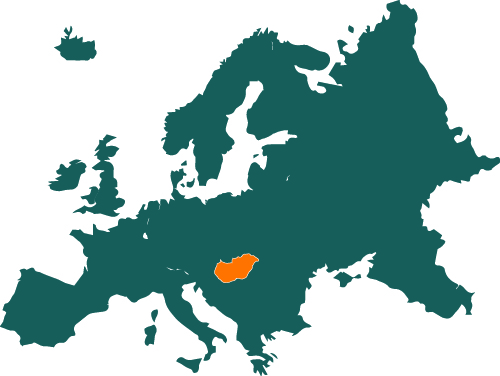
Hungary is a landlocked country in Central Europe. Its capital, Budapest, is bisected by the Danube River. Its cityscape is studded with architectural landmarks from Buda’s medieval Castle Hill and grand neoclassical buildings along Pest’s Andrássy Avenue to the 19th-century Chain Bridge. Turkish and Roman influence on Hungarian culture includes the popularity of mineral spas, including at thermal Lake Hévíz.

  • Official name: Hungary
  • Area: 93 022 km2
  • Population: 9 797 561 (2017)
  • Neighbouring countries: Austria, Slovakia, Ukraine, Romania, Serbia, Croatia, Slovenia
  • Official language: Hungarian
  • State form: Republic
  • Capital and largest city: Budapest (population: 1 729 040)
  • Other large cities: Debrecen, Szeged, Miskolc, Pécs, GyÅ‘r
  • Currency: Forint (HUF)
  • Time zone: CET (GMT +1)
  • Major rivers: River Danube (417 km), River Tisza (597 km)
  • Largest lakes: Lake Balaton, Lake Velence
  • Highest point above sea level: Kékes (1014 m) in the Mátra Hills
  • Hungary is a member of OECD, NATO, EU and the Schengen Convention.

Administratively, Hungary is divided into 19 counties with the capital city of Budapest being independent of any county government.

Hungary is among the top tourist destinations in Europe with the capital Budapest regarded as one of the most beautiful cities worldwide. Despite its relatively small size, the country is home to numerous World Heritage Sites, UNESCO Biosphere Reserves, the second largest thermal lake in the world (Lake Hévíz), the largest lake in Central Europe (Lake Balaton), and the largest natural grassland in Europe (Hortobágy).    

Geography

Hungary is a landlocked country, situated in the Carpathian Basin. Its two longest rivers called Danube and Tisza divide Hungary into three parts: Transdanubia (to the west of the Danube), the plain between the Rivers Danube and Tisza, and the Trans-Tisza region (to the east of the Tisza). Hungary’s ‘mountains’ are actually hills, which seldom exceed an elevation of 1,000 metres. Two-thirds of Hungary’s geographic area is less than 200 metres above sea level.

Lake Balaton, covering 598 km2, is one of the biggest tourist attractions of the country. The average depth of the lake is two to three metres, so the water warms up quickly in summer.

There are ten national parks in Hungary. Three of them situated on the Great Plain – Hortobágy, Kiskunság and Körös-Maros – provide protection to the wildlife and fragile wetlands, marshes and saline grasslands of the open puszta. Two are in the north: in the almost completely wooded Bükk Hills and in the Aggtelek region with its extensive system of karst caves. Danube-Ipoly is in Central Hungary, Balaton Uplands is in the West and Danube-Drava National Park is located in the South-west of the country, at the Croatian border. Őrség and FertÅ‘-Hanság are situated at the Austrian border.

Hungary is home to more than 2,000 flowering plant species, many of which are not normally found at this latitude. There are a lot of common European animals here (deer, wild hare, boar, otter) as well as some rare species (wild cat, lake bat, Pannonian lizard), and three-quarters of the country’s 450 vertebrates are birds, especially waterfowls, which are attracted by the rivers, lakes and wetlands.

Climate and Weather

For many international students the Hungarian climate can be very different from that of their countries, as Hungary has four different seasons. Whilst summers are warm, winters can be really cold; average temperatures range from -4 °C in January to 26 °C in July.

Hungary is in the temperate zone and has a relatively dry continental climate. The country is protected from extreme weather conditions by the surrounding mountain ranges, the Alps and the Carpathians.

It’s not always easy to find the right clothes to suit the weather, but the beauty of each season is definitely worth the effort.


Video and Photos

Country VISA

INTAKE PERIOD
Valid Intake Not Found
Programme
  • Foundation
    1. Social Work and Social Economics | MA
    2. Classical Musical Performance | MA
    3. European and International Business Law | LLM
    4. Intensive Foundation Semester | Foundation Program
    5. Intensive Basic Medicine Course ii (Pre-medical Studies) | Foundation Program
    6. Agricultural Environmental Management Engineering | Master Degree
    7. Business Administration and Management | Bachelor of science
    8. International Economy and Business | MSc
    9. Food Safety and Quality Engineering | MSc
    10. Engineering Management | MSc
    11. Environmental Engineering | MSc
    12. Data Science | MSc
    13. Social Work in Health Care | MSc
    14. Chemical Engineering | MSc
    15. Biology | MSc
    16. Geography | MSc
    17. Geoinformatics | MSc
    18. Applied Mathematics | MSc
    19. Urban Systems Engineering | MSc
    20. Hydrobiology - Water Quality Management | MSc
    21. Chemistry | MSc
    22. Physics | MSc
    23. Public Health | MSc
    24. Rural Development Engineering, MSc | MSc
    25. Agricultural Water Management Engineering | MSc
    26. Business Informatics | MSc
    27. Molecular Biology | MSc
    28. Computer Science Engineering | MSc
    29. Mechanical Engineering | MSc
    30. Mechatronical Engineering | MSc
    31. Computer Science | MSc
  • Degree
    1. Social Work and Social Economics | MA
    2. Classical Musical Performance | MA
    3. European and International Business Law | LLM
    4. Intensive Foundation Semester | Foundation Program
    5. Intensive Basic Medicine Course ii (Pre-medical Studies) | Foundation Program
    6. Agricultural Environmental Management Engineering | Master Degree
    7. Business Administration and Management | Bachelor of science
    8. International Economy and Business | MSc
    9. Food Safety and Quality Engineering | MSc
    10. Engineering Management | MSc
    11. Environmental Engineering | MSc
    12. Data Science | MSc
    13. Social Work in Health Care | MSc
    14. Chemical Engineering | MSc
    15. Biology | MSc
    16. Geography | MSc
    17. Geoinformatics | MSc
    18. Applied Mathematics | MSc
    19. Urban Systems Engineering | MSc
    20. Hydrobiology - Water Quality Management | MSc
    21. Chemistry | MSc
    22. Physics | MSc
    23. Public Health | MSc
    24. Rural Development Engineering, MSc | MSc
    25. Agricultural Water Management Engineering | MSc
    26. Business Informatics | MSc
    27. Molecular Biology | MSc
    28. Computer Science Engineering | MSc
    29. Mechanical Engineering | MSc
    30. Mechatronical Engineering | MSc
    31. Computer Science | MSc
  • Masters
    1. Social Work and Social Economics | MA
    2. Classical Musical Performance | MA
    3. European and International Business Law | LLM
    4. Intensive Foundation Semester | Foundation Program
    5. Intensive Basic Medicine Course ii (Pre-medical Studies) | Foundation Program
    6. Agricultural Environmental Management Engineering | Master Degree
    7. Business Administration and Management | Bachelor of science
    8. International Economy and Business | MSc
    9. Food Safety and Quality Engineering | MSc
    10. Engineering Management | MSc
    11. Environmental Engineering | MSc
    12. Data Science | MSc
    13. Social Work in Health Care | MSc
    14. Chemical Engineering | MSc
    15. Biology | MSc
    16. Geography | MSc
    17. Geoinformatics | MSc
    18. Applied Mathematics | MSc
    19. Urban Systems Engineering | MSc
    20. Hydrobiology - Water Quality Management | MSc
    21. Chemistry | MSc
    22. Physics | MSc
    23. Public Health | MSc
    24. Rural Development Engineering, MSc | MSc
    25. Agricultural Water Management Engineering | MSc
    26. Business Informatics | MSc
    27. Molecular Biology | MSc
    28. Computer Science Engineering | MSc
    29. Mechanical Engineering | MSc
    30. Mechatronical Engineering | MSc
    31. Computer Science | MSc