Mon - Fri 09:00-17:30
Sat 09:00-14:30Sunday Closed

#211/B5, 9 MILE POST, KANDY ROAD, KADAWATHA

Call for inquiry+94 711 999 111

IBS - International Business School

Hungary

About IBS - International Business School

From a school that was founded in 1991 as the first private higher education college in Central Europe, International Business School has grown into a truly modern and dynamic business school. We are proud to work in cooperation with a prestigious British university, The University of Buckingham which is rated top for graduate employability and has been leading the British National Student Survey in student satisfaction.

It is an attractive place to learn and teach because of our collaborative culture – a blend of academic rigour, cooperative teamwork, entrepreneurship, diversity and continuous innovation. The academic experience we offer is providing our students from over 100 countries of the world not only with an undergraduate or postgraduate degree but skills and networking opportunities that bring lifelong competitive advantages.

Vision and mission

Our vision is to be a regionally acknowledged, multiply accredited, multi-country provider of higher education services for a highly international and mobile student body, interested in the frontier areas of business and management.

Our mission is to provide economically and culturally relevant, English-language business and management-related education to people who can benefit from it. We are demand-led and customer-focused. We enhance learning, build confidence and create an opportunity for all who choose to invest in studying at our school.

We value:

  • creativity and innovation in the pursuit of excellence,
  • the potential of every person,
  • the expertise and commitment of our staff,
  • partnership and form strong and enduring collaborations where we can achieve more by working with other than alone,
  • quality and we continually enhance our quality assurance processes.

History

IBS opened its gates in 1991 welcoming students who wished to study business in English. The founders of the school had long term plans and thus they moved the college (practically run in some rented rooms of an office block) from Kelenföldi railway station to the second district, one of the most beautiful districts of Buda. In 2014, IBS moved to the north of Budapest and is now offering a real campus experience with 3 brand new buildings in a business environment. The completely renovated, reshaped and well-equipped buildings in Graphisoft Park – with the Residence Hall in its close vicinity – is a perfect place for studies as well as recreation with its riverside setting and garden.

Following a successful institutional accreditation in 1997, IBS became a recognized private college in Hungary, with the right to issue Hungarian college degrees (called Bachelor's degrees today) besides the English degrees.

Owing to the continuous and systematic development process, by now IBS runs eight Bachelor's and four Master's programmes in addition to the single programme (BA in Business Studies) available in 1991.

The first degrees were awarded in 1995; the number of IBS graduates by 2012 is over 3300.

Our graduates can be found in almost every country in the world, which provides enormous networking possibilities. To maintain this ‘human’ capital IBS treats its Alumni community as a top priority and organizes monthly Alumni Evenings. We are proud that every third graduate is an Alumni member, which is a very high rate considering that almost 50% of the students come from abroad.

Why British degree?

BAC-MAIN-LOGOjpg500x0_q60jpg
  • British universities are widely recognized for their research and teaching excellence.
  • An independent body, the Quality Assurance Agency is responsible for maintaining the high standards of British university education. A British degree guarantees you a good quality education.
  • 1,000 years of extraordinary academic innovation - currently the UK ranks third in the world for innovation.
  • Three of the ten top universities in the world are in the UK, including the university ranked first in the world.
  • British degrees are important to employers because they have a strong emphasis on gaining practical experience in the relevant field and they equip you with all the skills and knowledge necessary for a successful international business career.
  • The student-centred approach to learning in British education means that you will develop the independence, self-discipline and analytical skills sought after by employers.
  • English is the language of global business so studying a British degree enables you to improve your English language skills.
  • Class sizes are generally small enough to ensure that students have access to equipment and enough time to talk to their lecturers.
  • We give considerable importance to increasing students' employability skills. IBS has set up its UpSkill programme, which enhances and develops the skills which are most demandable in the job arena and lets our graduates have an advantage over others in job applications.
  • British programmes are shorter, saving you time and money. Our Bachelor’s programmes are 3-year full-time courses and our Master's programmes take 1 year.
  • 38 per cent of Nobel prize winners who studied abroad did so for a British degree.
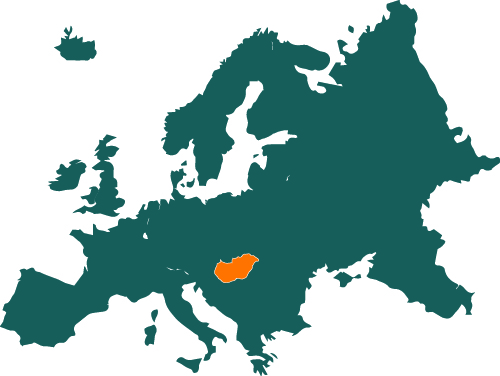
About Hungary

Hungary is a landlocked country in Central Europe. Its capital, Budapest, is bisected by the Danube River. Its cityscape is studded with architectural landmarks from Buda’s medieval Castle Hill and grand neoclassical buildings along Pest’s Andrássy Avenue to the 19th-century Chain Bridge. Turkish and Roman influence on Hungarian culture includes the popularity of mineral spas, including at thermal Lake Hévíz.

  • Official name: Hungary
  • Area: 93 022 km2
  • Population: 9 797 561 (2017)
  • Neighbouring countries: Austria, Slovakia, Ukraine, Romania, Serbia, Croatia, Slovenia
  • Official language: Hungarian
  • State form: Republic
  • Capital and largest city: Budapest (population: 1 729 040)
  • Other large cities: Debrecen, Szeged, Miskolc, Pécs, GyÅ‘r
  • Currency: Forint (HUF)
  • Time zone: CET (GMT +1)
  • Major rivers: River Danube (417 km), River Tisza (597 km)
  • Largest lakes: Lake Balaton, Lake Velence
  • Highest point above sea level: Kékes (1014 m) in the Mátra Hills
  • Hungary is a member of OECD, NATO, EU and the Schengen Convention.

Administratively, Hungary is divided into 19 counties with the capital city of Budapest being independent of any county government.

Hungary is among the top tourist destinations in Europe with the capital Budapest regarded as one of the most beautiful cities worldwide. Despite its relatively small size, the country is home to numerous World Heritage Sites, UNESCO Biosphere Reserves, the second largest thermal lake in the world (Lake Hévíz), the largest lake in Central Europe (Lake Balaton), and the largest natural grassland in Europe (Hortobágy).    

Geography

Hungary is a landlocked country, situated in the Carpathian Basin. Its two longest rivers called Danube and Tisza divide Hungary into three parts: Transdanubia (to the west of the Danube), the plain between the Rivers Danube and Tisza, and the Trans-Tisza region (to the east of the Tisza). Hungary’s ‘mountains’ are actually hills, which seldom exceed an elevation of 1,000 metres. Two-thirds of Hungary’s geographic area is less than 200 metres above sea level.

Lake Balaton, covering 598 km2, is one of the biggest tourist attractions of the country. The average depth of the lake is two to three metres, so the water warms up quickly in summer.

There are ten national parks in Hungary. Three of them situated on the Great Plain – Hortobágy, Kiskunság and Körös-Maros – provide protection to the wildlife and fragile wetlands, marshes and saline grasslands of the open puszta. Two are in the north: in the almost completely wooded Bükk Hills and in the Aggtelek region with its extensive system of karst caves. Danube-Ipoly is in Central Hungary, Balaton Uplands is in the West and Danube-Drava National Park is located in the South-west of the country, at the Croatian border. Őrség and FertÅ‘-Hanság are situated at the Austrian border.

Hungary is home to more than 2,000 flowering plant species, many of which are not normally found at this latitude. There are a lot of common European animals here (deer, wild hare, boar, otter) as well as some rare species (wild cat, lake bat, Pannonian lizard), and three-quarters of the country’s 450 vertebrates are birds, especially waterfowls, which are attracted by the rivers, lakes and wetlands.

Climate and Weather

For many international students the Hungarian climate can be very different from that of their countries, as Hungary has four different seasons. Whilst summers are warm, winters can be really cold; average temperatures range from -4 °C in January to 26 °C in July.

Hungary is in the temperate zone and has a relatively dry continental climate. The country is protected from extreme weather conditions by the surrounding mountain ranges, the Alps and the Carpathians.

It’s not always easy to find the right clothes to suit the weather, but the beauty of each season is definitely worth the effort.


Video and Photos

Country VISA

INTAKE PERIOD
Valid Intake Not Found
Programme
  • Degree
    1. BSC IN CORPORATE FINANCE | BSc (Hons)
    2. BSC IN BUSINESS AND DIPLOMATIC STUDIES | BSc (Hons)
    3. BSC IN BUSINESS MANAGEMENT | BSc (Hons)
    4. BSC IN BUSINESS MANAGEMENT WITH ARTS | BSc (Hons)
    5. BSC IN BUSINESS MANAGEMENT WITH TOURISM | BSc (Hons)
    6. BSC IN BUSINESS MANAGEMENT WITH HRM AND BUSINESS PSYCHOLOGY | BSc (Hons)
    7. BSC IN BUSINESS MANAGEMENT WITH MARKETING | BSc (Hons)
    8. BSC IN BUSINESS ADMINISTRATION AND MANAGEMENT | BSc (Hons)
    9. BSC IN INTERNATIONAL BUSINESS ECONOMICS | BSc (Hons)
    10. BA IN PSYCHOLOGY | BA(Hons)
    11. BA IN MARKETING - DIGITAL MEDIA | Bachelor of Arts
    12. MSC IN STRATEGIC FINANCE | MSc
    13. MSC IN STRATEGIC MARKETING | MSc
    14. MSC IN STRATEGIC FINANCE | MSc
    15. MSC IN STRATEGIC INTERNATIONAL MANAGEMENT | MSc
    16. MSC IN IT FOR BUSINESS DATA ANALYTICS | MSc
    17. MSC IN INTERNATIONAL MANAGEMENT | MSc
    18. MSC IN STRATEGIC HUMAN RESOURCE MANAGEMENT | MSc
  • Masters
    1. BSC IN CORPORATE FINANCE | BSc (Hons)
    2. BSC IN BUSINESS AND DIPLOMATIC STUDIES | BSc (Hons)
    3. BSC IN BUSINESS MANAGEMENT | BSc (Hons)
    4. BSC IN BUSINESS MANAGEMENT WITH ARTS | BSc (Hons)
    5. BSC IN BUSINESS MANAGEMENT WITH TOURISM | BSc (Hons)
    6. BSC IN BUSINESS MANAGEMENT WITH HRM AND BUSINESS PSYCHOLOGY | BSc (Hons)
    7. BSC IN BUSINESS MANAGEMENT WITH MARKETING | BSc (Hons)
    8. BSC IN BUSINESS ADMINISTRATION AND MANAGEMENT | BSc (Hons)
    9. BSC IN INTERNATIONAL BUSINESS ECONOMICS | BSc (Hons)
    10. BA IN PSYCHOLOGY | BA(Hons)
    11. BA IN MARKETING - DIGITAL MEDIA | Bachelor of Arts
    12. MSC IN STRATEGIC FINANCE | MSc
    13. MSC IN STRATEGIC MARKETING | MSc
    14. MSC IN STRATEGIC FINANCE | MSc
    15. MSC IN STRATEGIC INTERNATIONAL MANAGEMENT | MSc
    16. MSC IN IT FOR BUSINESS DATA ANALYTICS | MSc
    17. MSC IN INTERNATIONAL MANAGEMENT | MSc
    18. MSC IN STRATEGIC HUMAN RESOURCE MANAGEMENT | MSc