Mon - Fri 09:00-17:30
Sat 09:00-14:30Sunday Closed

#211/B5, 9 MILE POST, KANDY ROAD, KADAWATHA

Call for inquiry+94 711 999 111

Montreal College

Canada

About Montreal College

MONTREAL

Montreal
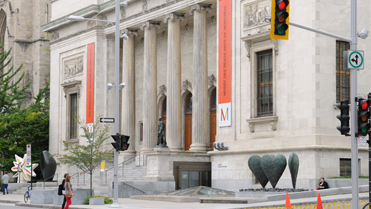
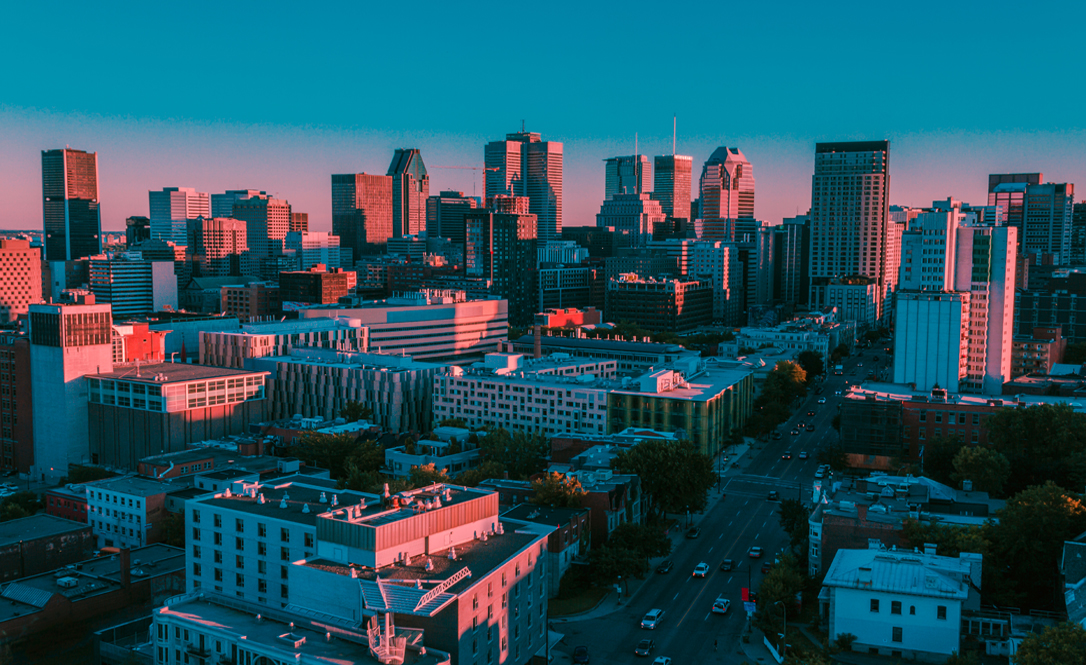
Currently recognized as the world’s best city for international students*, cosmopolitan Montreal offers a vibrant, culturally rich blend of North American pragmatism and European joie-de-vivre.

An international leader in such industries as aeronautics, artificial intelligence, information technology, life sciences and interactive entertainment, Montreal is often referred to as the Silicon Valley of the North.

Whatever the season, Montreal always pulses with activity. The city is renowned for its wide array of events, exhibitions, and festivals, all bolstered by a thriving food scene. MCIT’s campus is located in the middle of the action, at the very center of Montreal’s downtown core.

LIVING IN MTL

Montreal

GETTING AROUND

  • STM

    Visit website

  • Transit

    Visit website

  • Allo Exo

    Visit website

Montreal

LODGING

  • PVTistes

    Visit website

  • Kijiji

    Visit website

  • Craigslist

    Visit website

Montreal

CULTURE

  • MTL Blog

    Visit website

  • Cult MTL

    Visit website

  • Tourisme Montréal

    Visit website

Montreal

FOOD

  • Tastet

    Visit website

  • Eater

    Visit website

  • Une Parisienne à Montréal

    Visit website


The Montreal College of Information Technology is an institute of higher learning focused on delivering intensive, job-ready IT programs.

Buoyed by the College’s state-of-the-art technological capabilities, our faculty of instructors implements industry-relevant curricula through an engaging learning experience that seeks to ensure workforce readiness and resilience.

Since MCIT’s foundation in 2006, more than 3,000 of our graduates have found gainful employment.

The College

ENROLL

Enrolling at MCIT is a strong, purposeful step towards building a thriving professional future. We respond to your commitment by assisting you in choosing the right program and generally facilitating the admissions process.

Moreover, you can count on our team’s receptive support throughout your study-to-work pathway, from orientation to graduation through to career placement.

ENGAGE

Preparing you to fulfil your career aspirations in IT – that is our mission and purpose. At MCIT, you will engage in hands-on, project-based learning activities designed by our field-experienced instructors.

Whatever your chosen program of study, you will actively develop the technical skills that leading employers demand.

EMERGE

With your certificate or diploma in hand (1 to 6 months), you are now ready to shine in the workforce.

MCIT provides comprehensive job-search assistance, including employer meet & greets and interview preparation.

We give you all the tools you need to prepare and file your applications and watch your career emerge.

DISCOVER OUR


About Canada

Canada is a country in the northern part of North America. Its ten provinces and three territories extend from the Atlantic to the Pacific and northward into the Arctic Ocean, covering 9.98 million square kilometres, making it the world's second-largest country by total area.

Despite Canada’s great size, it is one of the world’s most sparsely populated countries. This fact, coupled with the grandeur of the landscape, has been central to the sense of Canadian national identity, as expressed by the Dublin-born writer Anna Brownell Jameson, who explored central Ontario in 1837 and remarked exultantly on “the seemingly interminable line of trees before you; the boundless wilderness around you; the mysterious depths amid the multitudinous foliage, where foot of man hath never penetrated…the solitude in which we proceeded mile after mile, no human being, no human dwelling within sight.” Although Canadians are comparatively few in number, however, they have crafted what many observers consider to be a model multicultural society, welcoming immigrant populations from every other continent. In addition, Canada harbours and exports a wealth of natural resources and intellectual capital equaled by few other countries.

Canada is officially bilingual in English and French, reflecting the country’s history as ground once contested by two of Europe’s great powers. The word Canada is derived from the Huron-Iroquois kanata, meaning a village or settlement. In the 16th century, French explorer Jacques Cartier used the name Canada to refer to the area around the settlement that is now Quebec city. Later, Canada was used as a synonym for New France, which, from 1534 to 1763, included all the French possessions along the St. Lawrence River and the Great Lakes. After the British conquest of New France, the name Quebec was sometimes used instead of Canada. The name Canada was fully restored after 1791, when Britain divided old Quebec into the provinces of Upper and Lower Canada (renamed in 1841 Canada West and Canada East, respectively, and collectively called Canada). In 1867 the British North America Act created a confederation from three colonies (Nova Scotia, New Brunswick, and Canada) called the Dominion of Canada. The act also divided the old colony of Canada into the separate provinces of Ontario and Quebec. Dominion status allowed Canada a large measure of self-rule, but matters pertaining to international diplomacy and military alliances were reserved to the British crown. Canada became entirely self-governing within the British Empire in 1931, though full legislative independence was not achieved until 1982, when Canada obtained the right to amend its own constitution.

Canada shares a 5,525-mile- (8,890-km-) long border with the United States (including Alaska)—the longest border in the world not patrolled by military forces—and the overwhelming majority of its population lives within 185 miles (300 km) of the international boundary. Although Canada shares many similarities with its southern neighbour—and, indeed, its popular culture and that of the United States are in many regards indistinguishable—the differences between the two countries, both temperamental and material, are profound. “The central fact of Canadian history,” observed the 20th-century literary critic Northrop Frye, is “the rejection of the American Revolution.” Contemporary Canadians are inclined to favour orderly central government and a sense of community over individualism; in international affairs, they are more likely to serve the role of peacemaker instead of warrior, and, whether at home or abroad, they are likely to have a pluralistic way of viewing the world. More than that, Canadians live in a society that in most legal and official matters resembles Britain—at least in the English-speaking portion of the country. Quebec, in particular, exhibits French adaptations: more than three-fourths of its population speaks French as their primary language. The French character in Quebec is also reflected in differences in religion, architecture, and schooling. Elsewhere in Canada, French influence is less apparent, confined largely to the dual use of French and English for place names, product labels, and road signs. The French and British influences are supplemented by the cultures of the country’s native Indian peoples (in Canada often collectively called the First Nations) and the Inuit peoples, the former being far greater in number and the latter enjoying semiautonomous status in Canada’s newest territory, Nunavut. (The Inuit prefer that term rather than Eskimo, and it is commonly used in Canada.) In addition, the growing number of immigrants from other European countries, Southeast Asia, and Latin America has made Canada even more broadly multicultural.

Moraine Lake at dawn Banff National Park southwestern Alberta Canada

Video and Photos

Country VISA